Water Activity (aw) in Dehydrated Food: Safe Limits by Product Type
- Share
- publisher
- Kangye Electric Team
- Issue Time
- Nov 3,2026
Summary
Safe water activity limits for dried food in one cited table: jerky 0.85 (0.91 vacuum) per USDA FSIS, dried fruit 0.60-0.65, herbs about 0.50, and the 0.60/0.70/0.85 risk bands from FDA and AQUALAB, with dehydrator design notes for OEM buyers.
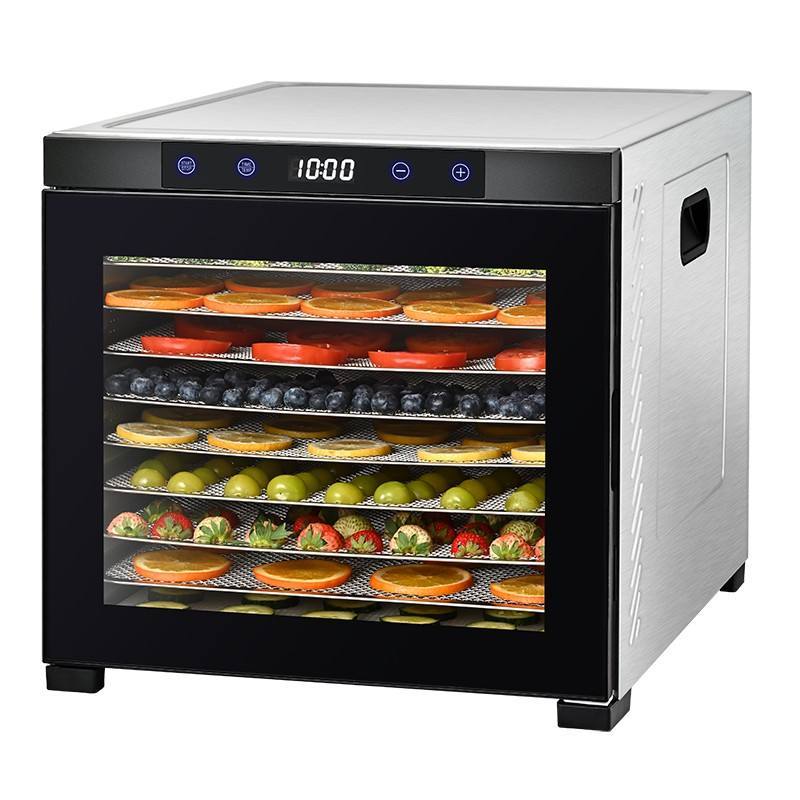
Direct answer: For dried foods stored at ambient temperature, water activity (aw) is the measurement that decides safety. Meat jerky must reach aw 0.85 or lower to be shelf-stable in air, or 0.91 or lower when vacuum packaged (USDA FSIS Jerky Compliance Guideline, 2020 verification). Most dried fruits are commercially dried to aw 0.60–0.66, herbs and spices to about 0.50, and keeping any dried product below aw 0.60 suppresses growth of essentially all microorganisms (AQUALAB, 2026).
If you sell dehydrators, jerky makers or dried snacks into regulated markets, water activity is the number that customs labs, retailers and recall investigators will look at first — not moisture content, and not the fact that a product "looks dry". This article collects the published safe limits for the main dehydrated categories, explains where each limit comes from, and shows how dehydrator design determines whether a production batch can actually hit them.
Water activity is the energy status of water, not the amount of water in the food
Water activity (aw) is defined as the ratio of the water vapour pressure above a food to the vapour pressure of pure water at the same temperature, so it always falls between 0 and 1.00 (FDA inspection technical guide, "Water Activity (aw) in Foods"). Two foods with the same moisture content can have very different aw values, because salt, sugar and protein bind water differently — a 10% moisture confection may sit at aw 0.55 while a 10% moisture meat snack still sits near 0.85 (VISBIO laboratory note, 2026). This is exactly why the USDA FSIS Jerky Compliance Guideline states that moisture-protein ratio is "an inappropriate indicator of shelf-stability" and that aw measured with a water activity meter is the appropriate verification parameter (USDA FSIS, guideline reaffirmed 2020).
One measurement detail matters for quality control: aw readings are temperature sensitive. The FDA notes that a 1°C difference between the sample and the air above it can shift the aw reading by roughly 0.05 — large enough to turn a passing batch into a failing one, so meters must equilibrate at a controlled temperature (FDA, Water Activity in Foods).

The risk bands are fixed: 0.85 for pathogens, 0.70 for mould, 0.60 for everything
Every published safe limit for dried food is built from the minimum aw each organism needs to grow, and those minimums have been stable in the literature for decades. The table below lists the organisms that matter most for dehydrated products, using the lower growth limits compiled by Novasina (2026) and cited throughout FSIS documentation.
| Organism | Minimum aw for growth | Why it matters for dried food |
|---|---|---|
| Most spoilage bacteria | > 0.91 | Stopped once drying is serious; not the design driver |
| Clostridium botulinum | ~0.93 (FDA) | Anaerobe; relevant in vacuum-packed moist products |
| Salmonella spp. | 0.93–0.95 (Novasina, 2026) | Survives dry storage even where it cannot grow |
| Staphylococcus aureus | 0.86 aerobic / 0.91 anaerobic (ICMSF, 1996) | The most dry-tolerant pathogen — sets the 0.85 limit |
| Most yeasts | ~0.88 (Novasina, 2026) | Spoilage risk in semi-moist fruit products |
| Most moulds | ~0.80 (AQUALAB, 2026) | Main shelf-life failure in dried fruit 0.70–0.85 |
| Xerophilic moulds | 0.61–0.62 (Xeromyces bisporus, Novasina, 2026) | The reason "very dry" is not the same as "safe forever" |
From these minimums, three practical bands follow. Above aw 0.85, most pathogens can grow and refrigeration or another validated hurdle is required. Between 0.70 and 0.85, moulds and yeasts become the main risk. Below aw 0.60, microbial proliferation is generally considered unable to occur — the level used for products designed for maximum shelf life (AQUALAB glossary, 2026; FDA Water Activity in Foods).
Safe aw limits by product type: jerky is 0.85, dried fruit 0.60–0.65, herbs about 0.50
Each dehydrated category has its own target, because the recipe solutes — salt in jerky, sugar in fruit — bind water differently. The table below consolidates the published limits and typical commercial values, each with its source and year.
| Product type | Safe limit / typical target aw | Source and year |
|---|---|---|
| Meat and poultry jerky, air storage | ≤ 0.85 (with mould-prevention steps) | USDA FSIS Jerky Compliance Guideline, reaffirmed 2020 |
| Jerky, vacuum packaged | ≤ 0.91, labelled "Refrigerate After Opening" | USDA FSIS, 2020 (per 9 CFR 317.2(k)) |
| Jerky identity standard (label) | MPR 0.75:1 or lower | USDA FSIS, 9 CFR part 319 |
| Dried fruit, commercial | aw 0.60–0.66 typical; safe band 0.60–0.75 | Agriculture Institute, 2026 |
| Dehydrated fruit and meat (general) | aw 0.60–0.65 or lower | Taiwan Ministry of Agriculture knowledge base |
| Dried herbs and spices | aw ~0.50 (about 10% moisture) | Taiwan Ministry of Agriculture knowledge base |
| Pet treats (jerky-style) | Follow jerky rule: ≤ 0.85 for shelf stability | USDA FSIS, 2020 |
| Low-acid canned foods (regulatory boundary) | aw 0.85 defines the regulated class | FDA, 21 CFR 113.3(e)(1)(ii) |
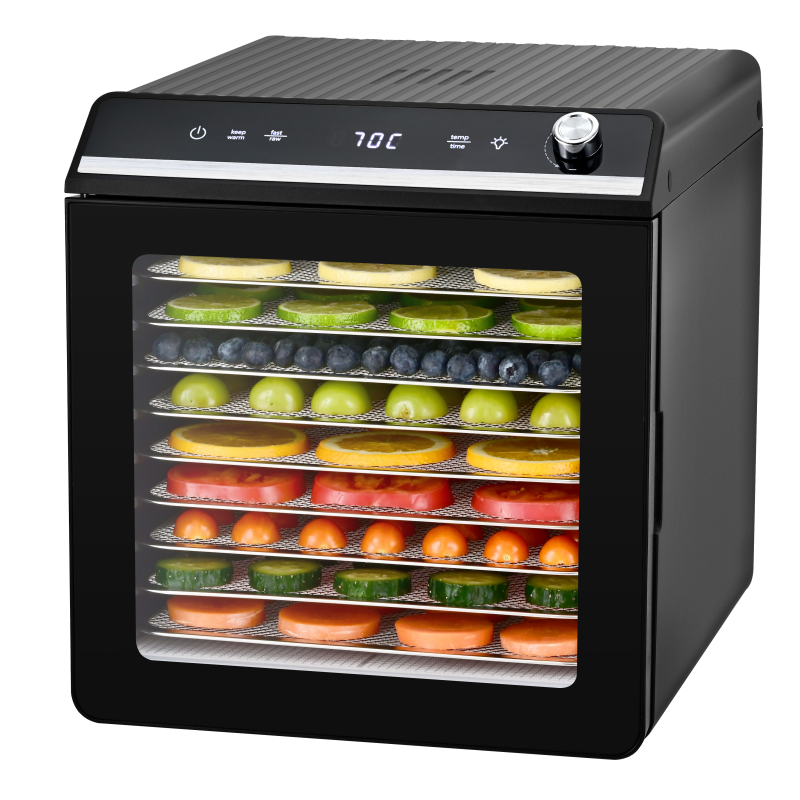
Two nuances are worth quoting. First, dried fruit is safe in a band, not at a point: aw 0.60–0.75 is listed as the safe range for dried fruits, but commercial practice targets the lower half because mould, not bacteria, is the failure mode (Agriculture Institute, 2026). Second, low aw prevents growth but does not sterilise: Salmonella can survive for long periods in dry environments, so aw control must be paired with a validated lethality step and hygienic handling — FSIS makes this explicit for jerky, where drying alone "does not necessarily result in an adequate reduction of Salmonella organisms" (USDA FSIS, 2020).
The jerky rule in practice: 0.85 in air, 0.91 under vacuum, and mould must be addressed
The FSIS numbers are conditional, and the conditions are the part importers most often miss. The 0.85 limit applies to products stored in oxygen-containing environments such as ambient air, and only if the producer takes steps to prevent mould growth — short inventory pull dates, low pH, antimycotics, coatings or packaging (USDA FSIS Jerky Compliance Guideline, 2020). Vacuum-packaged jerky in oxygen-impermeable film may use 0.91, because the anaerobic environment pushes the controlling limit from S. aureus to C. botulinum territory, but any vacuum product between 0.85 and 0.91 must carry a "Refrigerate After Opening" statement unless it is single-serve (USDA FSIS, 2020).
The margin logic is also documented: FSIS acknowledges that ICMSF lists S. aureus growth at aw 0.83 aerobic, and that most jerky carries additional hurdles such as sodium nitrite and salt, which is why the agency recommends 0.85 as the practical upper limit rather than the theoretical minimum (USDA FSIS, citing ICMSF 1996). For buyers, this means a supplier who tests only moisture content — or who quotes an aw value with no meter, no temperature control and no batch records — has not actually verified shelf stability.
Why moisture content alone cannot prove a dried food is safe
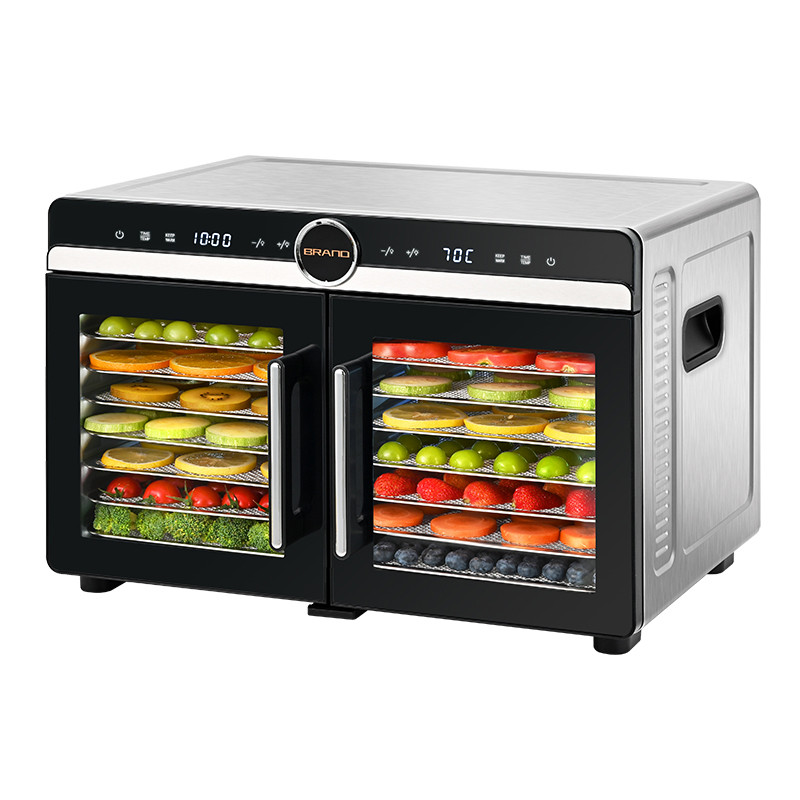
Moisture content tells you how much water a food contains; aw tells you whether microorganisms can use it. FSIS states this plainly: aw "better reflects available water" than moisture-protein ratio, and MPR remains only a labelling standard for jerky identity, not a safety verification (USDA FSIS, 2020). Quality teams that dry to a fixed moisture number can still miss the target, because formulation changes — more sugar in a marinade, more salt in a brine — shift aw without moving moisture content much. Conversely, two batches at identical moisture can differ by 0.05 aw if one absorbed humidity during cooling and packing. The practical consequence: aw belongs in the HACCP plan as a measurable critical limit at the drying step, recorded per batch (AQUALAB, 2026; FSIS Directive 7111.1 Rev. 2, 2020).
How dehydrator design determines whether a batch can hit the limit
Reaching aw 0.60 in fruit — or 0.85 in thick-cut jerky — is a machine problem as much as a recipe problem, and three design features do most of the work. First, heat placement: rear-mounted horizontal airflow keeps every tray in the same temperature field, while top or bottom-only heating creates vertical gradients that leave the coolest trays wetter at cut-off. Second, temperature precision: because a 1°C measurement error alone can shift aw by about 0.05 (FDA), a dehydrator with loose thermostatic control cannot promise reproducible end-points — a theme we covered in our temperature control deep-dive. Third, run time: jerky schedules in the FSIS guideline assume drying continues for hours after the lethality step, so a machine with a 48-hour timer and stable low-temperature holding (most Kangye Electric dehydrator models run 35–70°C across 5 to 22 trays) lets the process engineer dry to the target rather than to the clock.
For OEM buyers, the due-diligence checklist is short: ask for batch aw records, confirm the meter is calibrated at controlled temperature, and confirm the dehydrator's tray-to-tray temperature spread — Kangye Electric publishes its lab test methodology for exactly this reason, and the same nine-point measurement logic used for grills applies to dehydrator cabinets.
Source commercial dehydrators with documented drying performance
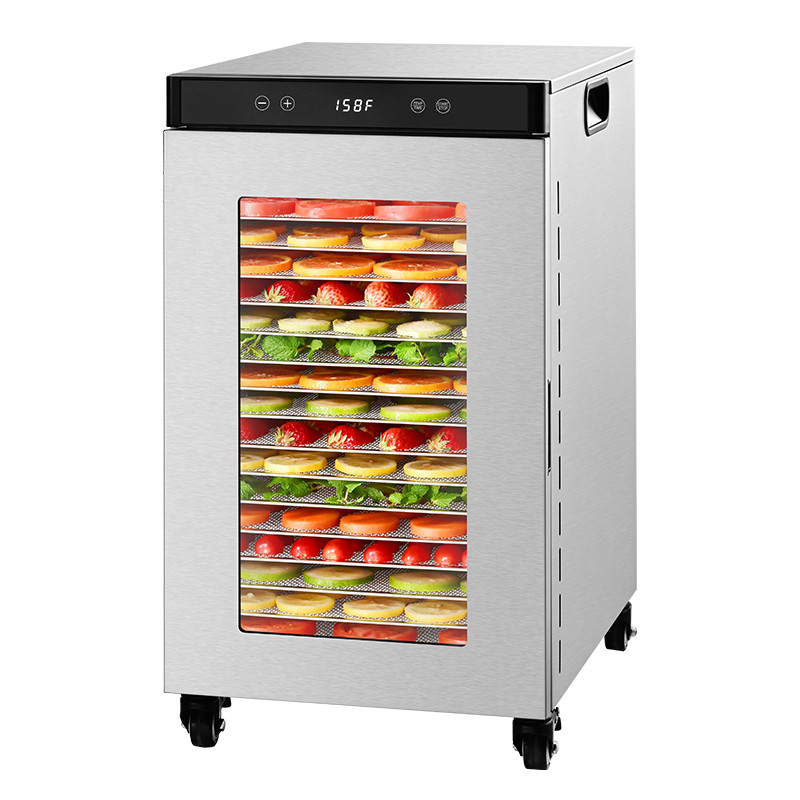
Kangye Electric manufactures stainless-steel food dehydrators from 4 to 22 trays with rear or back heating, 48h timers and calibrated thermostats — built so OEM partners can hit and verify aw targets batch after batch.
Frequently asked questions
What water activity makes dehydrated food shelf-stable?
Below aw 0.60, essentially no microorganism can grow, which is the level used for maximum-shelf-life products (AQUALAB, 2026). Regulatory limits sit higher: 0.85 for jerky in air, 0.91 for vacuum-packed jerky with a refrigerate-after-opening label (USDA FSIS, 2020).
Is dried fruit safe at aw 0.70?
Yes from a pathogen standpoint — most pathogens cannot grow below 0.86–0.91 — but moulds grow down to about 0.80 and xerophilic moulds to 0.61, so commercial dried fruit targets 0.60–0.66 for full shelf life (Agriculture Institute, 2026; Novasina, 2026).
Why is the jerky limit 0.85 and not lower?
Because 0.85 sits just below the most dry-tolerant pathogen, Staphylococcus aureus, which grows down to about 0.86 in air (ICMSF, 1996, via FSIS). FSIS adds the condition that mould-prevention steps must also be in place (USDA FSIS, 2020).
Can I use moisture content instead of aw?
No. FSIS explicitly calls MPR "an inappropriate indicator of shelf-stability" because bound and free water differ by formulation (USDA FSIS, 2020). Moisture content can be a process reference; aw is the safety verification.
How should an importer verify a supplier's aw claims?
Ask for per-batch aw records from a calibrated meter at controlled temperature, the HACCP critical limit cited to FSIS or FDA documentation, and the dehydrator's tray-to-tray temperature spread — a 1°C measurement error alone moves aw by about 0.05 (FDA).
Sources and Data Notes
- USDA FSIS — Compliance Guideline for Meat and Poultry Jerky Produced by Small and Very Small Establishments (reaffirmed in FSIS Directive 7111.1 Rev. 2, 2020): aw ≤0.85 aerobic / ≤0.91 vacuum, mould-prevention conditions, MPR 0.75:1 identity standard, Salmonella caveat.
- ICMSF (1996), as cited by FSIS: S. aureus growth limits aw 0.83 aerobic / 0.93 anaerobic; FSIS applies 0.85 / 0.91 as practical upper limits.
- FDA — Inspection Technical Guide "Water Activity (aw) in Foods": aw definition, 1°C ≈ 0.05 aw measurement sensitivity, 0.85 boundary and C. botulinum minimum ~0.93 under 21 CFR 113.3(e)(1)(ii).
- AQUALAB (Addium) glossary, accessed 2026: risk bands 0.85 / 0.70–0.85 / 0.60, S. aureus 0.86, practical 0.60 target for full microbial inhibition.
- Novasina, water activity lower growth limits table, accessed 2026: Salmonella 0.95, yeasts ~0.88, moulds ~0.80, xerophilic moulds 0.61–0.62.
- Agriculture Institute — Water Activity in Foods, 2026: dried fruits 0.60–0.75, commercial dried foods 0.60–0.66, conditioning practice.
- Taiwan Ministry of Agriculture knowledge base: dehydrated fruit and meat aw 0.60–0.65, dried herbs and spices ~0.5.