Technical Articles
All
Technical Articles
Buyer's Guide
Industry Insights

Technical Articles

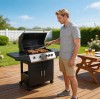
Gas Grill Temperature Uniformity: 9-Point Grid Test Data Across Burner Types

A healthy tube-burner gas grill maps a 30-45 degree C spread across the grate; infrared zones hold 4-15 degree C. Kangye Electric publishes its full 9-point grid test protocol, real 3-burner readings, 2026 benchmark data and the three maintenance faults that wreck uniformity.

Oct 23,2026
Gas Grill Temperature Uniformity: 9-Point Grid Test Data Across Burner Types

UL vs ETL vs cETL vs CE: Which Certification Does Your Target Market Actually Require?

UL and ETL are OSHA NRTL marks testing the same standards - ETL costs 10-30% less and ships faster in 2026. cETLus covers US and Canada in one file; CE is the EU legal baseline with GS expected by German retail. A market-by-market matrix with 2026 cost ranges, lead times and OEM sequencing from Kangye Electric.

Oct 19,2026

UL vs ETL vs cETL vs CE: Which Certification Does Your Target Market Actually Require?

What Is a Low-Pressure Propane Grill? Regulator and Gas Type Standards by Region

A low-pressure propane grill runs on gas reduced by a regulator to a fixed outlet pressure - 11 in w.c. in North America, 2.75 kPa in Australia and New Zealand, and 30, 37 or 50 mbar in Europe depending on the country. This guide explains the regulator types and the sizing rule, the QCC1 connector and OPD requirements, the European gas categories with their country lists, the certification mark each market requires, and the six specification items an OEM order has to fix before production.

Oct 7,2026

What Is a Low-Pressure Propane Grill? Regulator and Gas Type Standards by Region

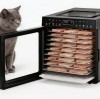
Food Dehydrator Energy Consumption: Real Lab Test Data

Food dehydrator energy consumption, measured: 1-7 kWh per batch by food type, wattage from 320-380W five-tray units to 1,450-1,730W commercial cabinets, and energy per kilogram of dried food. Includes a metered dehydrator-vs-oven comparison, the assumptions behind every calculation, and the four variables that move your electricity bill most.

Oct 6,2026

Food Dehydrator Energy Consumption: Real Lab Test Data

How to Choose a Food Dehydrator: Tray Count, Wattage and Heating Type

How to choose a food dehydrator by tray count, wattage and heating type: usable area vs tray count, wattage and heat recovery, rear vs bottom heating and airflow, temperature range 35-75C, stainless steel trays, timers, and OEM sourcing decisions.

Sep 9,2026

How to Choose a Food Dehydrator: Tray Count, Wattage and Heating Type

Pet Food Dehydrator Guide: Making Healthy Treats at Home

Pet food dehydrator guide: how to make healthy dehydrated dog treats at home safely — market data, USDA/FSIS meat-treat temperatures, ingredient guide, two recipes, machine selection and sourcing/compliance notes for brands and importers.

Sep 6,2026

Pet Food Dehydrator Guide: Making Healthy Treats at Home

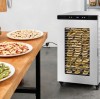
Commercial Food Dehydrator Buying Guide for Small Businesses

A sourcing-ready buying guide for small food businesses choosing a commercial food dehydrator: tray-count and batch math, horizontal vs vertical airflow, temperature control, stainless steel food-contact grades, USDA FSIS water-activity compliance for jerky, and a five-point factory verification checklist, featuring the Kangye KYS-500A/R and KYS-510A/R commercial dehydrator range.

Aug 29,2026

Commercial Food Dehydrator Buying Guide for Small Businesses

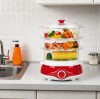
Electric Food Steamer Buying Guide: Tiers, Capacity and Features

How to choose an electric food steamer for your home or brand: tier count, capacity, wattage, features, materials and food safety compared, with the KYS-303A 11L 3-tier steamer from Kangye.

Aug 26,2026

Electric Food Steamer Buying Guide: Tiers, Capacity and Features

How to Choose a Gas BBQ Grill: Burner Count, Materials and Size

A practical guide to choosing a gas BBQ grill by burner count, cooking area, BTU ratings, materials and size — with honest advice on what the specs do and do not tell you, plus sourcing guidance for importers and restaurants. Featuring Kangye KYQ-61S 6-burner commercial, KYQ-193RB 3-burner premium and KYQ-M22 2-burner portable gas grills, all available for OEM/ODM.

Aug 23,2026

How to Choose a Gas BBQ Grill: Burner Count, Materials and Size

How Air Fryer Ovens Work: Convection, Heating Elements and Airflow

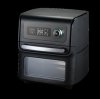
How an air fryer oven works: a top-mounted heating element generates heat up to 200°C while a high-speed fan moves air at up to 40 mph, driving the Maillard reaction at 140-165°C for crispy food with up to 90% less oil. Covers core components, airflow design, sourcing specifications, and the Kangye KYS-116AK 16L example.

Aug 31,2026

How Air Fryer Ovens Work: Convection, Heating Elements and Airflow

Chamber vs External Vacuum Sealer: Which Is Right for Your Business?

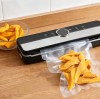
Chamber and external vacuum sealers solve different packaging problems. This guide compares how each works, vacuum levels, liquid handling, bag costs, cycle speed, maintenance and total cost of ownership, with a decision matrix for restaurants, butchers, central kitchens and brands sourcing commercial vacuum sealers.

Aug 20,2026

Chamber vs External Vacuum Sealer: Which Is Right for Your Business?

Indoor Electric Grill Buying Guide: What to Look for in 2026

A practical 2026 indoor electric grill buying guide for importers and brands: why the category is growing, how heating elements and smokeless systems work, wattage and 120V circuit limits, temperature control, non-stick coatings, open vs contact form factors, certification, and a sourcing checklist featuring the Kangye KYS-868 indoor grill and KYS-203A outdoor electric grill.

Aug 17,2026

Indoor Electric Grill Buying Guide: What to Look for in 2026

Vacuum Sealer Technology: How Suction and Sealing Create Airtight Packaging

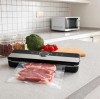
How a vacuum sealer actually works: the two-step suction-and-sealing cycle, vacuum pump types, external vs chamber machines compared, what a 50 kPa vacuum degree means, seal quality physics, and the food safety rules (USDA, FDA, MSU Extension) every importer must apply when sourcing a vacuum sealer line.

Aug 14,2026

Vacuum Sealer Technology: How Suction and Sealing Create Airtight Packaging

Food Dehydrator Heating Systems Explained: Top, Bottom and Rear Heat

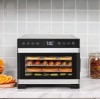
Food dehydrator heating systems explained for buyers: top, bottom and rear heat designs, nichrome vs ceramic vs PTC elements, thermostat accuracy, and U.S. extension-service temperature guidance - with sourcing specs for Kangye KYS-365 and KYS-362 rear-heat dehydrators.

Aug 11,2026

Food Dehydrator Heating Systems Explained: Top, Bottom and Rear Heat