Stainless Steel Grades in Food Dehydrators: 304 vs 430 Explained
- Share
- publisher
- Kangye
- Issue Time
- Aug 30,2026
Summary
A practical, EEAT-based guide for importers and brands comparing stainless steel 304 vs 430 in food dehydrators: composition, corrosion behavior, food-contact regulations, market data, verification checks and Kangye OEM stainless series.
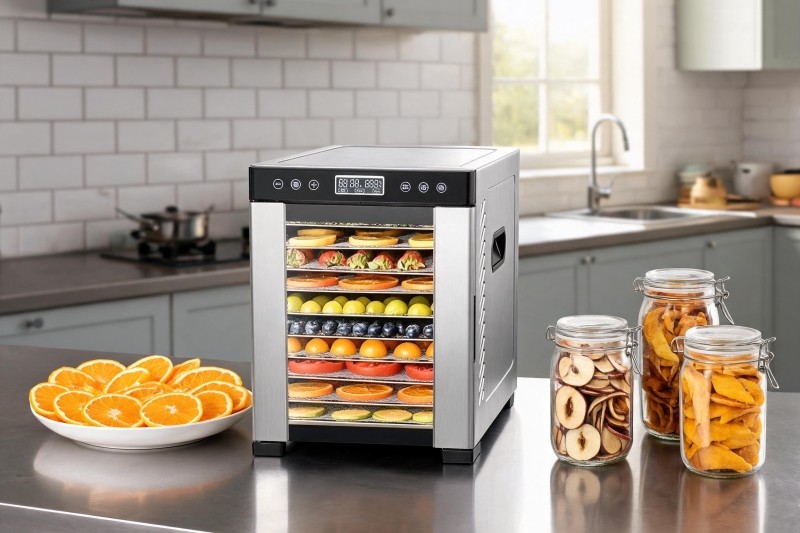
Walk through any appliance showroom or scroll any import catalog and you will see the same phrase repeated across food dehydrator listings: "stainless steel". What that phrase does not tell you is which stainless steel. The two grades that dominate the category are stainless steel 304 vs 430 — an austenitic, nickel-bearing alloy that has become the default for food-contact parts, and a ferritic, nickel-free alloy that keeps cost down but trades away long-term corrosion performance. For brands, importers and distributors sourcing dehydrators from China, the difference is not a metallurgy footnote. It decides how a machine looks after two hundred jerky batches, how easy it is to clean to food-safety standards, how often customers file rust complaints, and how wide your margin is when a nickel price shock hits your bill of materials. This guide explains what grade 304 and grade 430 actually are, why the choice matters specifically inside a food dehydrator, what food-contact regulations in the US, EU and China expect from the steel, and — most importantly — how to verify which grade you are actually paying for before you sign a purchase order. We write from the perspective of a Guangdong-based OEM/ODM manufacturer with 35+ years of experience and exports to 100+ countries, so the intent is practical, not promotional: we will give you the honest trade-offs, including where 430 is perfectly acceptable. To understand grade selection you first need a map of the machine. A typical dehydrator has several distinct material zones: In rear-heating (horizontal airflow) designs, which we analyzed in depth in our article on food dehydrator heating systems, warm air is drawn from behind the trays and pushed horizontally across every shelf, so all 5, 10 or more trays see the same conditions. Models such as our 10-tray KYS-361D/G and compact 5-tray KYS-309 series follow this architecture. Because air passes over the interior continuously for 8–48 hours per batch, the interior materials are exposed to warm, humid air for far longer than the surface of a stovetop pan ever is. That changes the corrosion calculus completely. For a buyer, the rule of thumb is simple: anything that food touches — or that condensation from food can reach — should be specified with food-grade corrosion-resistant steel. Cosmetic surfaces that never meet food or moisture have more freedom. Grade 304 (UNS S30400, JIS SUS304, often sold as "18/8" or "18/10") is the most widely used stainless steel in the world, and for good reason. Its nominal composition is roughly 18.0–20.0% chromium and 8.0–10.5% nickel, balanced by iron. The chromium forms a thin, transparent chromium-oxide passive layer that gives stainless steel its name; the nickel stabilizes the austenitic crystal structure that makes the alloy tough, formable and essentially non-magnetic. Three properties make 304 the reference grade for food equipment: In the dehydrator market, stainless-steel machines that advertise a food-grade interior are generally fabricated from sheet in the 300 series — industry references commonly cite 22-gauge 304 for trays and chamber liners. When brands compete on premium positioning, "304 food-grade stainless steel" is the spec they put on the box. Grade 430 (UNS S43000, JIS SUS430) is the most common ferritic stainless steel in appliances. Its nominal composition is 16.0–18.0% chromium with little or no nickel (typically under 0.5–1.0%). Ferritic structure gives 430 three characteristics a purchasing manager will notice immediately: it is magnetic, it costs materially less than 304, and its corrosion resistance is good in dry, indoor conditions but limited against chlorides and sustained moisture. 430 is everywhere in the appliance industry for a reason: range-hood bodies, oven panels, refrigerator doors, control trim, and the outer shells of countless small appliances. It looks identical to 304 on a showroom floor — the difference shows up over years of service in a wet environment. In a dehydrator, an outer 430 cabinet that never meets food can be a perfectly reasonable cost decision. But when 430 is used for trays or interior surfaces that sit inside a warm, humid chamber for days on end, buyers should expect tea-staining, surface pitting, and eventually rust spots — especially if the unit is used for salty jerky marinades, hard water, or acidic fruit. We want to be blunt about the honest trade-off here: 430 is not "bad steel" and it can be food-contact legal — the migration limits discussed below are typically met. The problem is durability and hygiene over time. A pitted surface is harder to sanitize because microorganisms can lodge in defects that cleaning cannot reach. If your brand promises years of reliable service, grade placement matters more than the upfront alloy saving. The table below summarizes the practical differences that matter to an importer or brand owner comparing dehydrator quotations. If you source multiple components from a bill of materials, you will often see both grades in one product: a 430 outer cabinet wrapped around a 304 food zone, or 304 trays inside a polymer body. That mixed-material engineering is legitimate and cost-smart — the danger is only when a supplier upgrades 430 into the food-contact zone without telling you. For a broader reference across the grades used in kitchen appliances — including SUS443 and why nickel-free ferritics can sometimes rival 304 — see our companion technical article on stainless steel grades in kitchen appliances. A dehydrator is, in corrosion terms, one of the harshest environments in the small-appliance world — and this is why the 304 vs 430 question cannot be answered with a generic table. Consider what the interior endures: There is also a food-safety angle that has nothing to do with metal migration limits. Regulatory guidance in the US — from FDA food-code principles to USDA FSIS facility requirements — treats equipment surfaces as safe only if they are smooth, non-absorbent and corrosion-resistant, because rough or corroded surfaces shelter bacteria. A tray that develops pits is no longer fully cleanable, no matter how carefully it is washed. When you are exporting jerky-capable dehydrators to North America or the EU, grade selection is therefore a hygiene decision, not just an aesthetics decision. The science of how moisture moves out of food — and why airflow uniformity matters — is covered in our article on the science behind food dehydration, while temperature accuracy at low and high set-points is examined in food dehydrator temperature control. Metal food-contact materials are not regulated by one global standard, but by a patchwork of frameworks whose practical message for 304 vs 430 is consistent. Knowing these rules helps you ask suppliers the right compliance questions. The practical conclusion: both 304 and 430 can pass release-limit testing for food contact. Standards are thresholds, not predictors of 10-year durability. That is precisely why experienced buyers specify grade for the food zone and verify it, rather than accepting a migration certificate as proof of long-term performance. For a fuller picture of certification documents you should request at RFQ stage, our guide to export compliance for kitchen appliances walks through the paperwork market by market. The overall food dehydrator market continues to grow steadily — analysts at PW Consulting sized it at approximately US$2.06 billion in 2025, heading toward US$3.29 billion by 2032 (about 7.0% CAGR), with horizontal-airflow designs holding the largest share (roughly 74%) and North America the largest regional market. Within that growth, the material mix is shifting upward. MarkWide Research tracks the commercial stainless-steel dehydrator segment separately at US$385.6 million in 2026, forecast to reach US$673.9 million by 2035 (6.4% CAGR), driven by foodservice operators who must satisfy FDA/NSF sanitation expectations and EU Regulation 1935/2004 requirements. The retail signal is even more visible. In 2026, NESCO introduced a new stainless-steel dehydrator line, and COSORI launched a premium stainless-steel model with auto shut-off and memory functions. Established premium players (Excalibur, Tribest, Weston and others) have long anchored their ranges with stainless construction. The pattern behind these launches is that brands are using stainless steel as the visible proof of a "clean, food-safe, durable" story — a response to years of consumer concern about plastics, BPA-free labeling and long drying cycles at 160°F. For importers this trend cuts both ways. On the demand side, stainless models support higher average selling prices and defend shelf space in the $150–300+ premium band. On the cost side, stainless adds real bill-of-materials weight: 304 typically costs 30–50% more than 430, and 316 costs 35–50% more again, with the 304 premium tracking nickel — a commodity that has repeatedly spiked over the last decade. That is why smart sourcing asks two questions simultaneously: which grade do we need in the food zone, and where can we safely use a lower grade without compromising the product story? The sustainability angle — steel is endlessly recyclable, and durable equipment replaces disposable plastic units — is examined in our guide to sustainability in food dehydrators and small appliances. "Stainless steel" on a datasheet is not a specification. Here is the verification checklist we use internally and recommend every importer apply before paying for a container of dehydrators: Incoming inspection is where most brands either catch a grade substitution or lose a season of sales to returns. Our article on commercial food dehydrator buying for small businesses includes the IQC checks we recommend for commercial-scale orders. Kangye Electric Appliance (Guangdong, China) manufactures stainless-steel dehydrator series for OEM/ODM brands across the home and entry-commercial segments. Below are the two models most relevant to buyers who want stainless construction without jumping to a full commercial line. As with any order, the exact grade of every food-contact component is confirmed in the specification sheet and can be documented before mass production. Stainless steel 304 vs 430 is not a battle between "good" and "bad" metal — it is a decision about where each grade belongs. Grade 304 earns its premium in the food-contact and high-humidity zones of a dehydrator: trays, chamber liners and anything a customer will scrub with citrus cleaner after a salty jerky batch. Grade 430 is a legitimate, cost-saving choice for outer shells, trim and structural parts that stay dry, and a poor choice for the wet interior if you expect years of flawless service. The buyers who protect their brands do four things: they name the grade in the spec, they verify it with mill certificates and on-site test kits, they place grades component-by-component rather than blanket-across the machine, and they hold suppliers accountable with warranty terms. The stainless-steel trend in the dehydrator market is real and accelerating — and it rewards brands that can honestly say which stainless steel they used. If you are sourcing stainless-steel dehydrators — 5-tray compact units, 10-tray home machines, or full commercial lines — and want grade-confirmed, compliance-documented manufacturing, we would be glad to walk you through the specification sheet. For the food-contact zone — trays and the interior chamber — 304 is the better choice: its 18–20% chromium and 8–10.5% nickel give it markedly better resistance to the moisture, fruit acids and salts a dehydrator sees over years of use, plus easier long-term sanitization. Grade 430 (16–18% chromium, no nickel) is acceptable for dry, cosmetic parts such as the outer shell, where its lower cost is a legitimate saving. Yes — 430 can meet food-contact migration requirements under EU (Regulation 1935/2004 and Council of Europe release limits), US FDA expectations and China's GB 4806.9 standard. "Food safe" and "durable in wet service" are different questions, though: 430 is more prone to pitting and tea-staining in the warm, humid interior of a dehydrator, which over time makes surfaces harder to keep hygienic. Rust or tea-staining in the food zone usually means the component is a lower ferritic grade such as 430 (or even 201-class material), was scratched or contaminated with free iron during fabrication, or is exposed to chlorides — salty marinades, hard water or bleach-based cleaners — that overwhelm its passive layer. Ask the supplier for the named grade and a mill certificate; 304-grade surfaces rarely show this in normal dehydrator service. A magnet is the quick screen: 430 is strongly magnetic while annealed 304 is essentially non-magnetic — though deep-stamped 304 trays can develop slight magnetism, so treat a weak pull as inconclusive. Portable stainless-steel test solutions identify 300-series vs 400-series in seconds. For purchasing decisions, always require the grade in writing with a mill certificate rather than relying on field tests. Three reasons: 304 stainless sheet costs roughly 30–50% more than 430 and several times more than food-grade polymers; the alloy's price tracks nickel, a volatile commodity; and fabrication (forming, welding, finishing) is slower than plastic molding. In return you get odor-free, stain-resistant, warp-proof trays that last for many years and support premium retail pricing — which is why the industry's premium lines keep moving toward stainless. Commercial and foodservice dehydrators are typically built with AISI 304 (or 316 in coastal, high-humidity or high-acid operations) for food-contact and wet-side surfaces, because NSF/ANSI and FDA Food Code sanitation expectations favor smooth, corrosion-resistant, non-absorbent materials. Grade 430 appears mainly in exterior panels and trim. For more detail, see our commercial dehydrator buying guide. Ready to spec your stainless-steel dehydrator? Contact our team to discuss grade requirements, food-contact documentation and OEM/ODM programs — or browse the full dehydrator range.Introduction: 304 vs 430 Stainless Steel — the Question Behind Every "Stainless" Dehydrator
Where Stainless Steel Actually Touches Your Food
Grade 304 Stainless Steel: The Workhorse of Food-Contact Components
Grade 430 Stainless Steel: The Budget Ferritic Alternative
304 vs 430 Stainless Steel: Side-by-Side Comparison
Property
Grade 304 (SUS304)
Grade 430 (SUS430)
Structure / type
Austenitic
Ferritic
Chromium
18.0–20.0%
16.0–18.0%
Nickel
8.0–10.5%
0.5–1.0% max
Magnetic
No (slight after cold working)
Yes
Corrosion resistance
Excellent — wet, acidic, salty, humid
Moderate — dry indoor use; pitting/tea-staining in humid or acidic duty
Relative material cost
High — roughly 30–50% above 430 (nickel-linked)
Low — nickel-free, price more stable
Food-contact suitability
Recommended for trays & chamber surfaces
Legal but not preferred for wet food-contact duty
Typical dehydrator use
Trays, chamber liners, premium cabinets
Outer shells, trim, non-contact brackets
Why the Grade Choice Matters Inside a Dehydrator
Regulatory Context: What Food-Contact Rules Say About Steel
The Market Is Moving to Stainless: Data and Product Signals
How to Verify Stainless Steel Grade Before You Order
Featured Products: Stainless-Steel Dehydrators from Our Factory
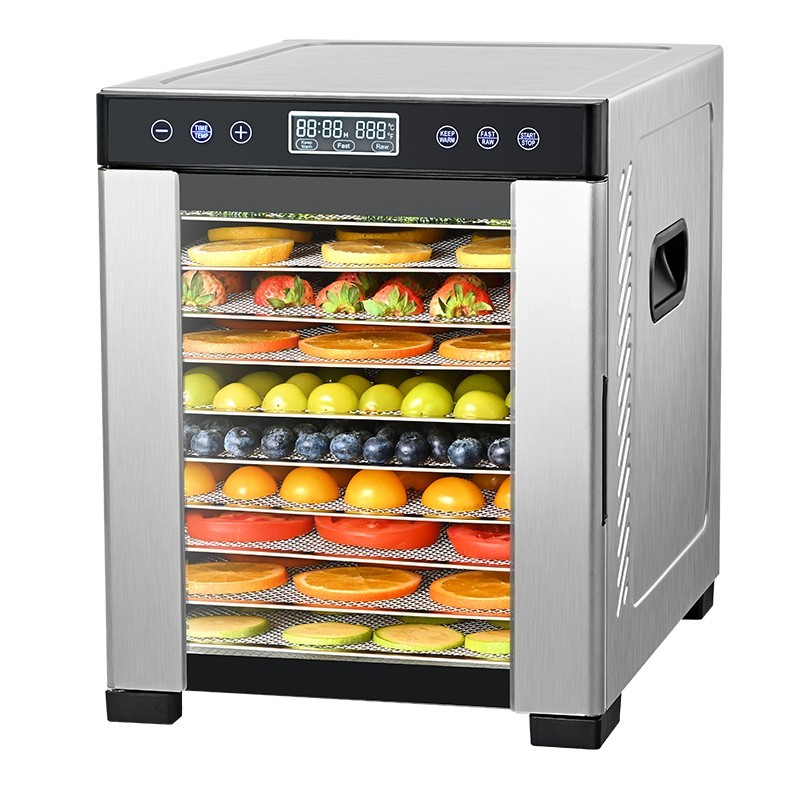
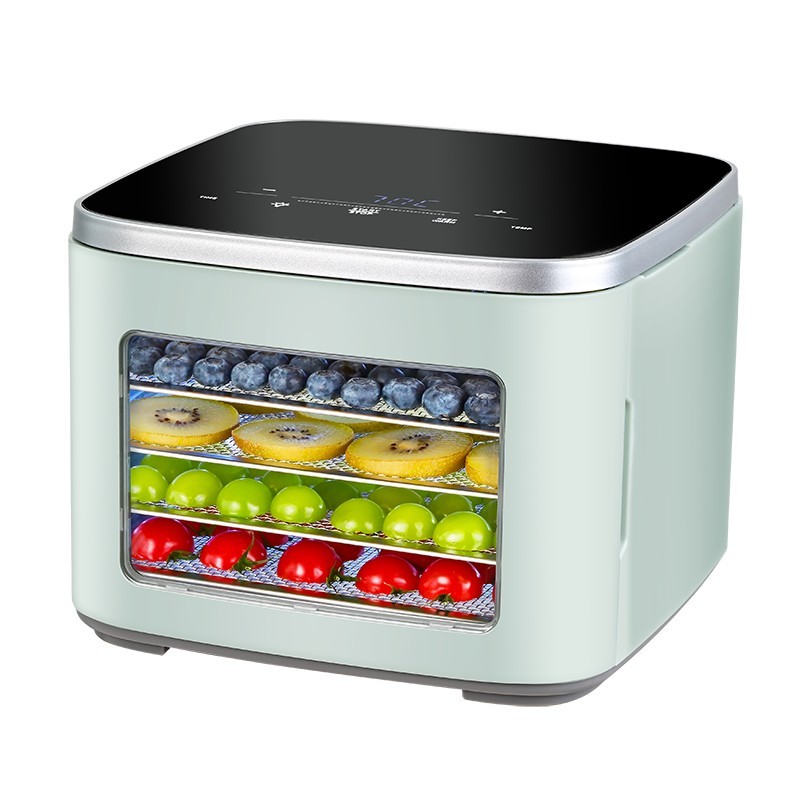
Conclusion: Grade Your Spec, Protect Your Brand
Frequently Asked Questions
Is 304 or 430 stainless steel better for food dehydrators?
Is 430 stainless steel food safe?
Why does my "stainless steel" dehydrator rust or show brown spots?
How can I tell if dehydrator trays are 304 or 430?
Why are stainless steel dehydrators so much more expensive than plastic ones?
What stainless steel grade do commercial dehydrators use?