Pet Feeder & Water Fountain Buying Guide: How to Choose the Right Products for Your Market
- Share
- Issue Time
- Aug 4,2026
Summary
A complete B2B buying guide for pet feeders and water fountains: market size and growth data, feeder architecture (gravity vs timer vs smart), capacity and portion control, anti-jam dispensing, power strategy, fountain filtration and pump noise, materials comparison, smart features, certifications and export compliance, a sample evaluation checklist, and an FAQ for global buyers.
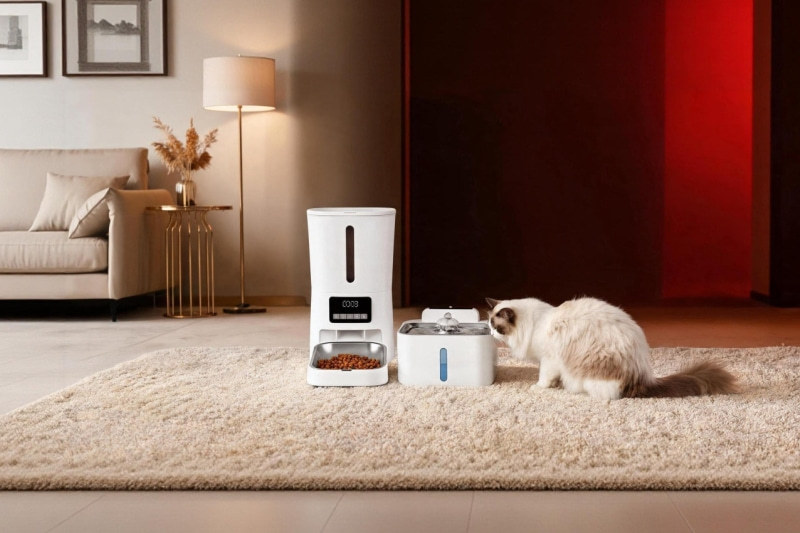
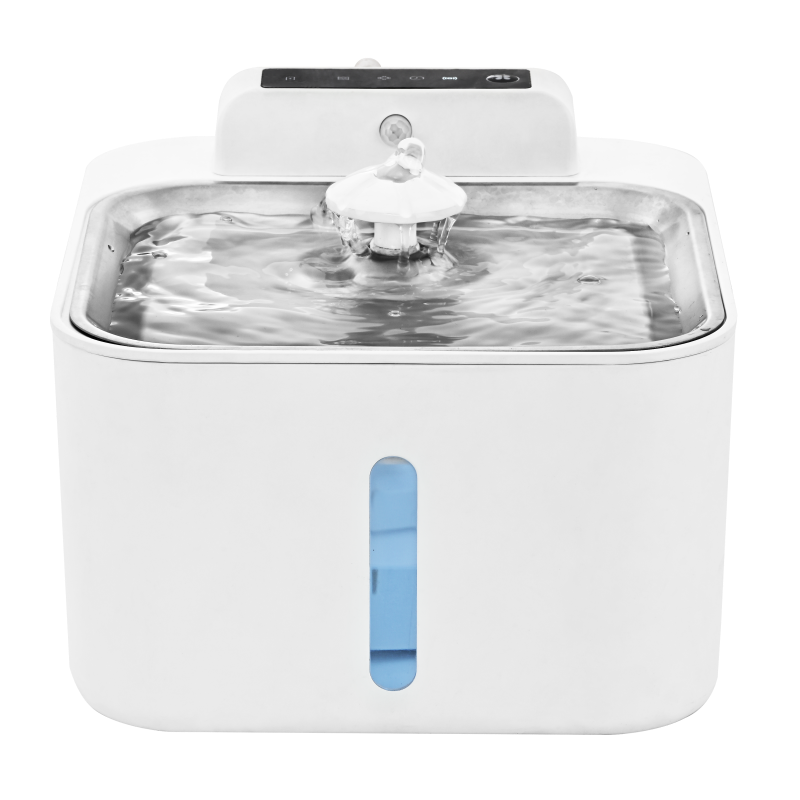
The pet care appliance category is one of the fastest-growing segments in small household appliances. Automatic pet feeders and pet water fountains are no longer niche accessories — they have become mainstream products stocked by retailers, e-commerce sellers, and subscription-box brands across North America, Europe, and Asia-Pacific. For B2B buyers, the challenge is no longer whether to enter the category, but how to select the right feeder and fountain models that will actually sell, perform reliably, and survive the regulatory checks at destination. This buying guide walks through the decision framework we use at Kangye — a kitchen and pet care appliance OEM/ODM manufacturer based in Guangdong, China — when helping importers, distributors, and private-label brands shortlist pet feeder and water fountain products. It covers market size, technical specifications, material choices, filtration systems, power strategies, certification requirements, and the sourcing pitfalls that cost buyers money. Before evaluating individual products, it is worth understanding the size of the opportunity you are buying into. The data points below help frame realistic sales expectations and product positioning. The growth is being driven by three structural forces: rising pet ownership and "pet humanization," busier urban lifestyles that demand automation, and the spread of smart-home connectivity expectations. Importantly for buyers, these forces are pushing demand beyond simple gravity feeders toward connected, app-controlled, portion-controlled products with meaningful technical complexity — which is exactly where manufacturing quality separates good products from returns and refunds. Automatic pet feeders fall into three broad architectures. Each serves a different price point, use case, and consumer profile. Matching your market positioning to the right architecture is the first sourcing decision. Simplest architecture: food flows down by gravity as the pet eats. No power required, very low failure rate, and the cheapest to produce. Mid-tier: a rotating mechanism dispenses preset portions at scheduled times. Runs on AC power or batteries, with simple controls. Premium tier: app control, scheduling from a phone, feeding logs, voice-assistant compatibility, and sometimes camera or weight sensors. For most importers entering the category today, the sweet spot is a well-executed timer or smart feeder with anti-jam dispensing, decent capacity, and battery backup — products that solve real problems (portion control, missed meals during power cuts) without requiring a complex software stack that increases cost and support burden. Feeder capacity is one of the first specifications buyers check, and it maps directly to the target customer. The market segments capacity into three rough bands, and choosing the wrong band for your channel is a common sourcing mistake. As a practical rule, a 3-liter feeder holds roughly 1.0–1.2 kg of kibble — enough for a medium dog for about a week, or a cat for well over a week. Before finalizing a model, ask the factory for the usable capacity (the volume that actually dispenses without jamming), not just the nominal tank volume. Kangye's KYS-13B Automatic Cat Dog Feeder, for example, pairs a 3-liter tank with portion sizes of roughly 10 g per serving and up to 9 scheduled meals per day — a configuration we validated against typical cat and small-dog feeding routines before bringing it to market. Two engineering details determine whether a feeder delights users or generates returns: portion accuracy and jam resistance. Both are directly tied to the design of the dispensing mechanism, and both are areas where low-cost manufacturing shortcuts become visible. Ask the factory for their test protocol: how many dispensing cycles the mechanism is rated for, and what kibble size ranges were tested. Kangye runs anti-jam testing across kibble diameters and humidity conditions during development, because jam complaints are the #1 driver of feeder returns in the market. Power design is a decisive buying factor for pet products, because pets are fed on schedules that do not pause for power outages. The three common strategies are: For water fountains, battery life has become a headline specification. A 3-liter cordless fountain with a 2000–3600 mAh battery and sensor-based operation can run for weeks on a single charge — Kangye's KYS-15B Wireless Pet Water Fountain is rated for up to 27 days depending on mode and battery capacity. When evaluating battery claims, ask what conditions the number was measured under: continuous pump operation, sensor-triggered mode, or a mix. The difference can be 2–3x in real-world run time. Pet water fountains address a real health problem: many cats and dogs drink too little, which contributes to urinary and kidney issues. Moving, filtered water encourages drinking. But a poorly designed fountain — noisy pump, hard-to-clean surfaces, weak filtration — quickly becomes an unused appliance. The filtration system determines water freshness and owner satisfaction. Multi-layer filtration is the current standard: Kangye's KYS-15B fountain uses a dual-stage activated carbon + ion-exchange resin filtration system, which balances cleaning effectiveness with reasonable filter replacement cost — a trade-off we recommend buyers examine closely, since filter refills are a recurring-revenue opportunity for your brand. Fountains typically offer a bubbling stream, a gentle fall, or both. Cats in particular are sensitive to noise — a pump that vibrates or hums can deter drinking. Look for: Stainless steel is the default premium choice for fountains in 2026 — it ranks first in most buyer guides because it is easier to keep clean and safer for pets prone to chin acne and allergies. For the feeder hopper itself, food-grade, BPA-free materials with a clear material declaration are the minimum requirement for any destination market. Cleaning is where pet appliances live or die. A fountain or feeder that is hard to disassemble and scrub will develop biofilm, smell, and end up in a closet. When evaluating a sample, count the disassembly steps: This is also a packaging and documentation point: the user manual should include a clear cleaning schedule and filter-replacement indicator. Importers who ignore maintenance design end up with high return rates that no marketing spend can fix. Not all smart features are worth the engineering cost. Based on what sells in the US and EU markets, the features that justify a premium are: A caution for buyers: connectivity quality depends on the module and app the factory ships with. Ask which IoT platform the feeder uses (common options include Tuya), whether the app supports your target regions' app stores, and whether firmware updates are supported over the air. A feeder with a dead app is a refund waiting to happen. Pet products sit at the intersection of food-contact, electrical, and consumer-safety regulation. Before committing to a model, verify the compliance package for your destination market: Kangye's product lines are certified to UL, ETL, CE, and other standards, with test reports and component-level documentation available to buyers — including the KYS-15B fountain and KYS-13B feeder. When comparing factories, treat "we can get it certified later" as a red flag; certification should be part of the product development, not an afterthought. Once you have shortlisted two or three factories, run a structured sample evaluation. This is the stage where most sourcing mistakes are caught: Kangye has applied its two decades of small-appliance OEM/ODM experience to a focused pet care line that covers the two core products in this guide — and the adjacent category that feeds into pet wellness trends. The Kangye KYS-15B 3L Wireless Pet Water Fountain targets the fastest-growing segment of the hydration market: cordless, app-free, sensor-activated operation with genuinely long battery life. It is a strong candidate for importers and private-label brands looking to launch a premium pet care SKU with minimal software overhead. Both pet products share the same OEM/ODM flexibility as Kangye's kitchen line: private-label branding and packaging, voltage and plug configuration, feature and color adjustments, and complete export documentation. Kangye is also a partner to brands that want to bundle pet care products with their existing kitchen appliance programs — one factory, one quality system, one compliance framework. A pet water dispenser (gravity dispenser) simply holds a reservoir and refills a bowl by gravity — no pump, no filter. A pet water fountain continuously circulates water through a pump and filter, keeping it moving, oxygenated, and filtered. Fountains encourage more drinking, which is why they are preferred for cats and for pets prone to urinary issues, but they require cleaning and filter replacement. Many brands now offer fountain models with gravity-feed options in one unit. Typically every 2–4 weeks for activated carbon filters, depending on water hardness, pet hair load, and usage. Some premium fountains pair a washable sponge pre-filter with a longer-life cartridge to reduce recurring cost. The KYS-15B's dual-stage design is tuned so the carbon layer remains effective for a standard replacement cycle while the ion-exchange resin protects pump life in harder water. Most automatic feeders are designed for dry kibble only. Semi-moist and freeze-dried foods require specialized dispensing mechanisms and refrigeration concerns that most budget feeders cannot support. If your market feeds freeze-dried or wet foods, specify this requirement to the factory during sourcing — it changes the hopper design, the dispensing mechanism, and often the price. As a rule of thumb, plan about 50–60 g of kibble per day for a 5 kg cat and 150–300 g per day for a medium dog. For two weeks of automated feeding, you would need roughly 1 kg of kibble for a cat (a 3L tank usually suffices) and 2–4 kg for a medium dog (a 5L+ tank or a refill plan with a neighbor is safer). Always combine large-capacity feeders with a backup plan, since no feeder is failure-proof over long absences. For the right customer, yes. Cordless fountains remove cord-chewing risks, allow placement anywhere (kitchen island, bedroom, patio), and simplify cleaning since the pump assembly has no trailing cable. The trade-offs are battery management and a higher price point. Sensor-activated cordless fountains such as the KYS-15B, which run only when a pet approaches, address the battery-life objection while keeping noise to a minimum. Stainless steel does not develop micro-scratches that trap bacteria, is dishwasher-safe, resists odors, and keeps water cooler. Plastic is lighter and cheaper but requires more diligent cleaning and may show wear that concerns health-conscious owners. For brands targeting the premium segment, stainless steel construction is now an expected feature rather than a differentiator. Thinking about adding pet care products to your assortment? Kangye supports OEM/ODM development of pet feeders, water fountains, and pet treat appliances with certification-ready compliance packages. Contact our team to discuss samples, MOQs, and customization options.Pet Feeder & Water Fountain Buying Guide: How to Choose the Right Products for Your Market
The Market Opportunity: Size, Growth, and Demand Drivers
Market Snapshot 2026
Step 1: Choose Your Feeder Architecture — Gravity, Timer, or Smart
Gravity Feeders
Timer Feeders
Smart / Connected Feeders
Step 2: Capacity — Matching Tank Size to Pet Size and Household
Capacity Band
Typical Tank Size
Best Fit
Compact
Below 3 liters
Cats and small dogs; single-pet homes; apartment dwellers who refill weekly
Mid-range
3–5 liters
Medium dogs; multi-day trips; the mainstream e-commerce volume band
Large
Above 5 liters
Large-breed dogs, multiple pets, shelters, and commercial users
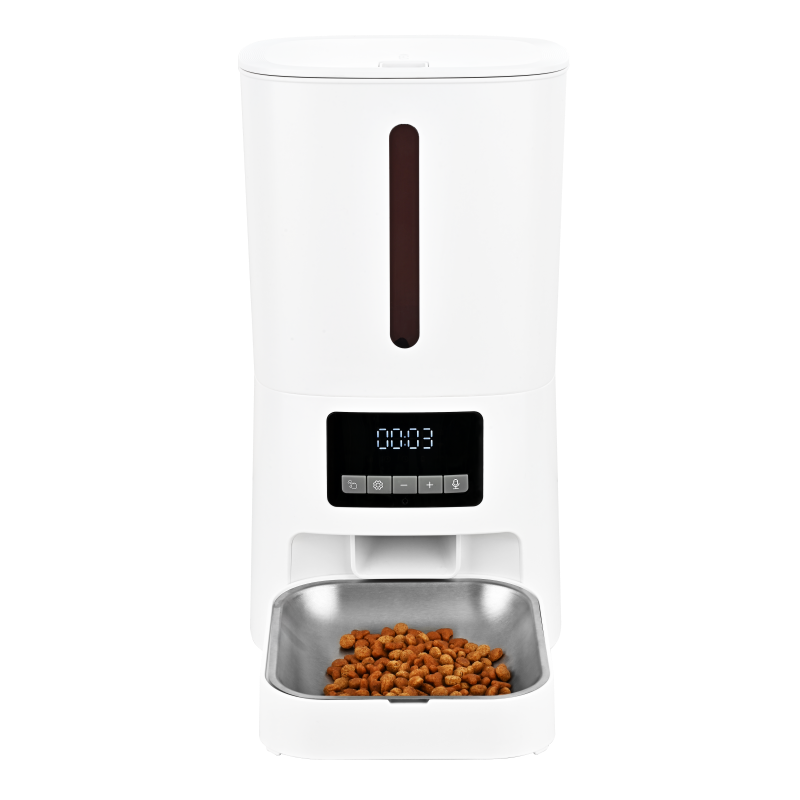
Step 3: Portion Control and Anti-Jam Dispensing
Step 4: Power Strategy — AC, Battery, or Dual Power
Step 5: Water Fountains — Filtration, Flow, and Materials
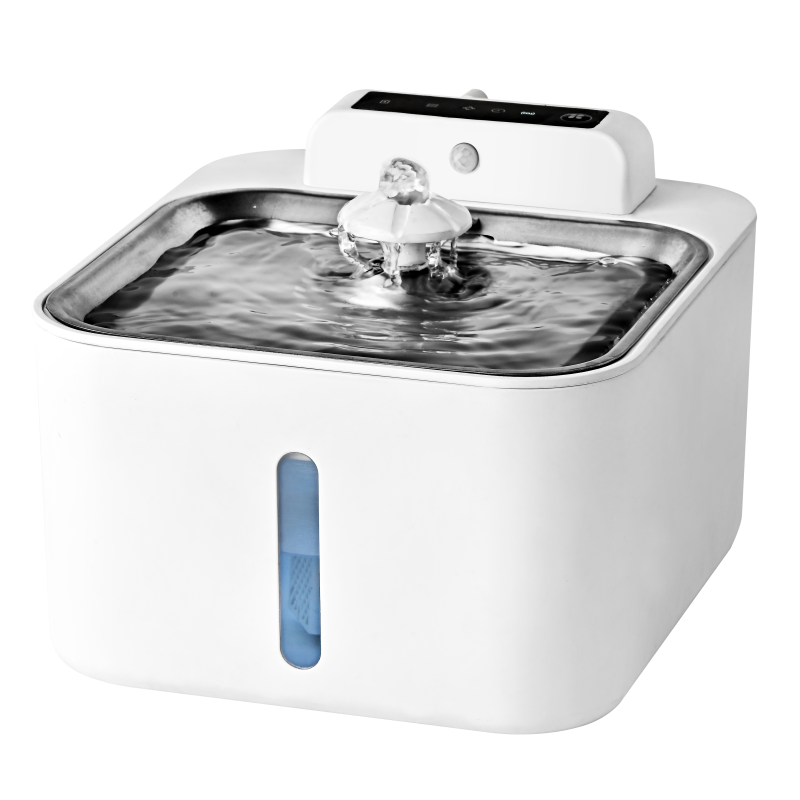
Filtration Systems: What Actually Matters
Flow Types and Pump Noise
Materials: Stainless Steel, Ceramic, or BPA-Free Plastic
Material
Pros
Cons
Stainless steel
Resists scratches and bacteria; dishwasher-safe; keeps water cooler; premium perception
Higher cost; slightly heavier
Ceramic
Inert, odor-resistant, aesthetic appeal, stable
Fragile in shipping and daily use; heavier
BPA-free plastic
Light, affordable, easy to mold into complex designs
Micro-scratches can trap bacteria; needs more diligent cleaning
Step 6: Ease of Cleaning and Maintenance
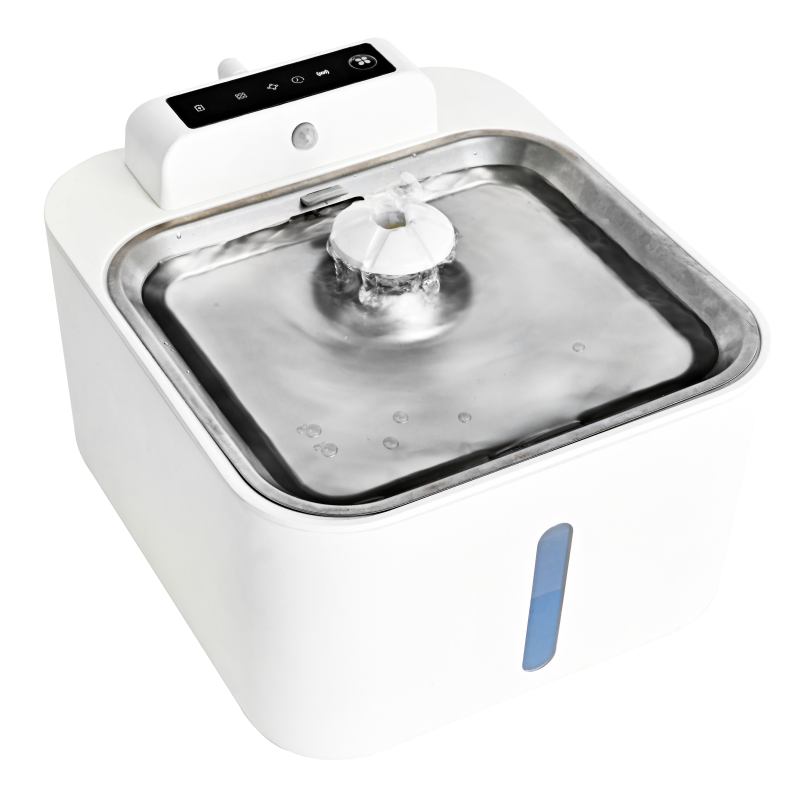
Step 7: Smart Features — What Justifies the Premium
Step 8: Certifications, Materials Safety, and Export Compliance
Step 9: Sample Evaluation Checklist Before You Commit
Kangye's Pet Care Line: Products Designed for Global Buyers
Featured Product: Kangye Wireless Pet Water Fountain KYS-15B
Key Takeaways for Global Buyers
Frequently Asked Questions
What is the difference between a pet water fountain and a pet water dispenser?
How often should a pet water fountain filter be replaced?
Can automatic feeders handle wet food or only dry kibble?
What capacity feeder do I need for a two-week vacation?
Are wireless pet fountains worth the premium over corded models?
Why is stainless steel recommended over plastic for pet fountains?