Kitchen Appliance OEM Statistics 2027: MOQ, Lead Times, Tooling Costs and Certification Fees
- Share
- publisher
- Kangye Electric Team
- Issue Time
- Oct 30,2026
Summary
A cited statistics hub for 2027 appliance programs: market sizing across four research houses, MOQ by container fill, injection tooling tiers, development and certification timelines, 2026 export and tariff data, and the CPSC recall record as a quality benchmark. Every figure carries a year and a source.
Direct answer: For a kitchen appliance OEM program commissioned in 2027, the planning figures are an MOQ of about 300–500 units per SKU for stock models and 1,000–3,000 units for structural customization, injection tooling at USD 8,000–25,000 per medium part, 8–11 months for a ground-up development and 2–10 weeks for certification depending on scheme. Every figure below carries a year and a named source, workshop calibrations are labelled as such, and nothing is a single-point estimate because published ranges for the same metric commonly differ by three to ten times.
Why kitchen appliance OEM figures diverge so widely between sources
Two published numbers for the same metric are almost never measuring the same thing, and that is the first thing a buyer has to accept when building a 2027 budget. A market research house quotes a retail-value market size that includes brand margin, marketplace fees and distribution; a manufacturer quotes ex-factory revenue. On tooling, one sourcing firm describes a single-cavity prototype mold for a small part while another describes a multi-cavity hardened production mold for a large housing. The table below shows how roughly the same category is valued by four houses publishing in 2026 — the spread of about 4.5 times is a scope difference, not an error.
| Metric (2026 base year) | Figure | Scope as published | Source |
|---|---|---|---|
| Global air fryer market, 2026 | USD 10.54 billion | Retail value, all channels | Fortune Business Insights, 2026 |
| Global air fryer market, 2026 | USD 2.7 billion | Retail value; supply-side ex-factory USD 1.44 billion for 2025 | Global Market Insights, 2026 |
| Global airfryer market, 2026 | USD 1.53 billion | Narrow scope, shipment-driven | PW Consulting, 2026 |
| Small kitchen appliances, 2026 | USD 65.46 billion | Countertop small appliances, residential plus commercial | Mordor Intelligence, 2026 |
| Food dehydrators, 2026 | USD 2.36–2.74 billion | Residential, commercial and industrial units | Coherent Market Insights; Market Data Forecast, 2026 |
Read the money column as a sanity band, not a target. The useful signal sits in the structure: air fryer growth has moved from first-purchase penetration to replacement and premiumization, so revenue now comes from specification, not volume.
Which statistics should shape a 2027 OEM sourcing plan?
Six data points move a 2027 plan more than any market forecast headline: category growth, shipment stability, concentration, regional split, channel shift and the safety record. Growth tells you whether volume is worth chasing; concentration says how much of the retail shelf is already spoken for; regional split tells you which certification package to fund first; the recall record sets the evidence standard your factory should be able to meet.
| Statistic | Figure | Source (year) |
|---|---|---|
| Small kitchen appliance market, 2026 to 2031 | USD 65.46bn to 84.63bn, 5.27% CAGR | Mordor Intelligence (2026) |
| Air fryer market, 2026 to 2035 | USD 10.54bn to 20.99bn, 8.99% CAGR | Fortune Business Insights (2026) |
| US countertop air fryer shipments | Stabilized near 2023 levels | PW Consulting citing AHAM (2026) |
| Top 5 air fryer brands, 2025 combined share | 84.4% | Global Market Insights (2026) |
| Market leader share, 2025 | 34.4% | Global Market Insights (2026) |
| Asia Pacific share of air fryers, 2025 | 46.34% | Fortune Business Insights (2026) |
| Digital × manual BOM cost gap | 18–25% higher for digital | PW Consulting, industry teardowns (2025) |
| Online retail CAGR to 2031 | 6.01% (B2C share 73.10% in 2025) | Mordor Intelligence (2026) |
The 84.4% concentration figure matters more than the growth rate. When five brands hold that much of a category, new entrants compete on specification, lead time and landed cost — the layer where factory capability gets tested. It also explains why so many 2027 enquiries arrive as private-label briefs.
What are realistic MOQ figures by product category for 2027?
Container fill, not negotiation, is what sets MOQ on most kitchen appliances, and that is why published MOQ ranges swing so hard between categories. A heavy grill needs few units to fill a 40HQ; a compact dehydrator needs several hundred. The most reliable 2027 planning anchor is a factory’s own container quantity, because that number is a physical calculation rather than a policy.
| Category and model | Carton and container data | 40HQ quantity / MOQ |
|---|---|---|
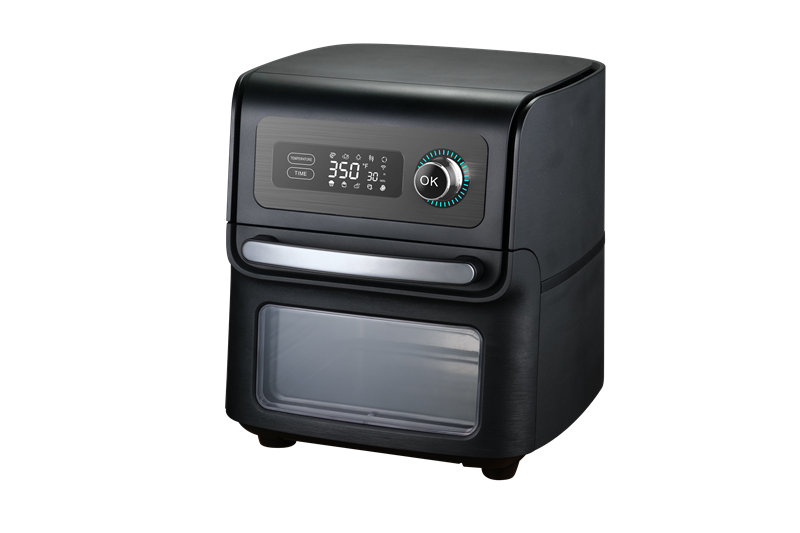
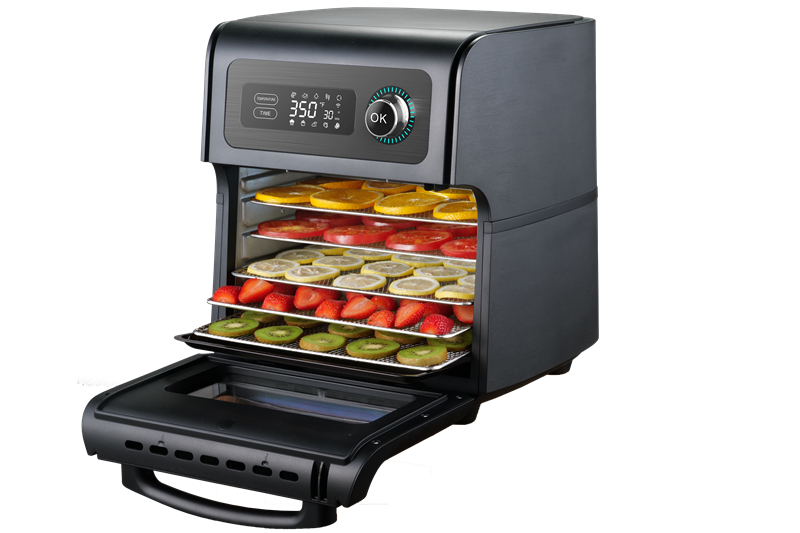
| 16 L digital air fryer oven, KYS-116 | Carton 480×420×450 mm | 780 pcs |
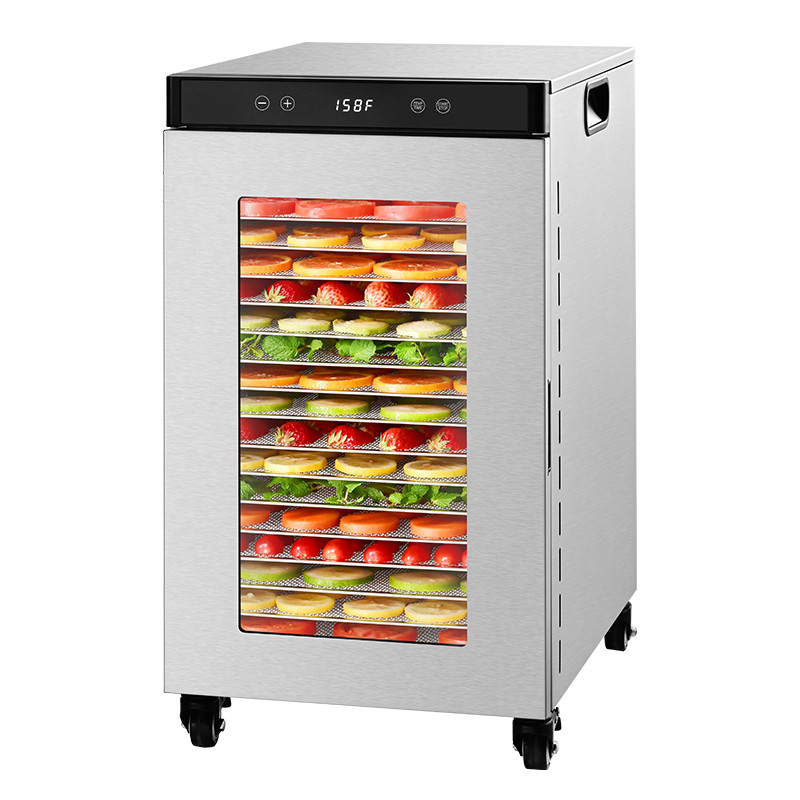
| 16/17-tray commercial dehydrator, KYS-500A-R | Master 523×420×620 mm | 518 pcs |
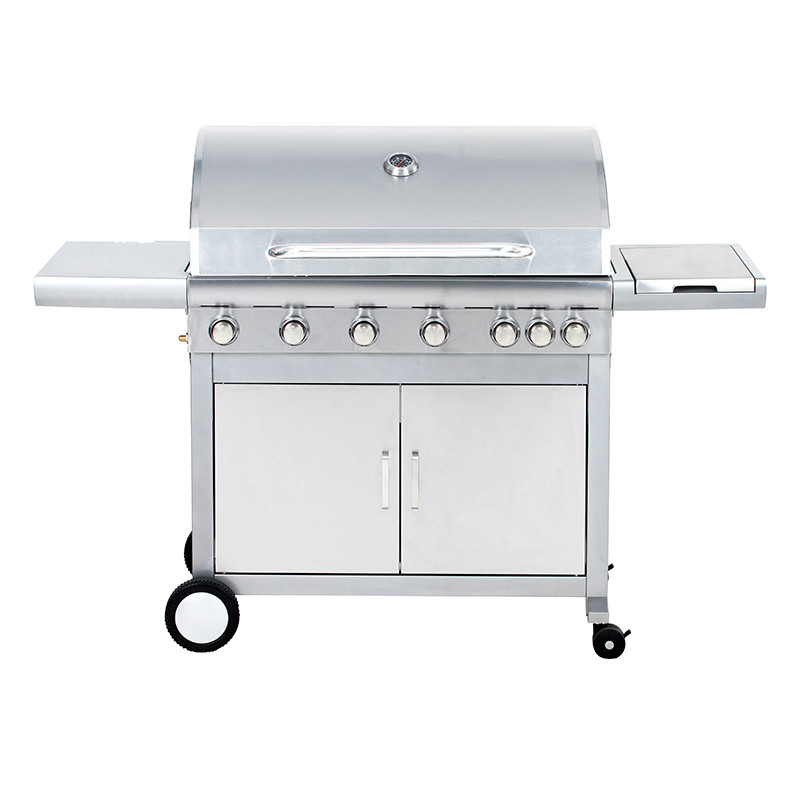
| 6-burner commercial gas grill, KYQ-61S | Master 1040×625×645 mm | 160 pcs |
| Stock model, light customization | Packaging, colour, control panel artwork | 300–500 pcs per SKU |
| Structural customization | New housing, chamber or tray geometry | 1,000–3,000 pcs per SKU |
Workshop calibration: the first three rows are Kangye Electric container calculations from live product data, not third-party estimates. Compare them with a sourcing firm’s published band of 500 to 1,000 units for a basic product and the gap is explained entirely by product size. Our guide to kitchen appliance MOQ by category covers negotiating down without breaking the loading plan.
How much does injection mold tooling cost, and what drives the spread?
Tooling quotes for the same part can arrive 5 times apart because four variables are priced differently: part size, cavity count, steel grade and finish. A single-cavity aluminum prototype mold is a different asset from a hardened multi-cavity production tool.
| Tool tier | Typical cost per tool | Typical lead time | Source (year) |
|---|---|---|---|
| Prototype / single-cavity aluminum | USD 1,500–8,000 | 3–5 weeks | GM MoldTech (2026); JS Precision (2026) |
| Production tool, medium part | USD 8,000–25,000 | 6–11 weeks | OkTool (2026); GM MoldTech (2026) |
| Large housing, multi-cavity | USD 25,000–80,000+ | 10–16 weeks | OkTool (2026); JS Precision (2026) |
Ownership is where most margin leaks. A tool paid for by the brand should carry a written title clause, a loan-and-return protocol and a condition audit before shipment. Our breakdown of injection mold tooling cost and ownership rules sets out the contract language; the figure to carry into 2027 is that amortizing USD 8,000–25,000 of tooling across 1,000 units adds USD 8–25 to unit cost.
How long do development and certification take in 2026–2027?
Development time is dominated by tooling and certification, not design hours. A ground-up appliance moves through design freeze, mold build, sampling, certification and pilot run; a colour or branding change on a stock model skips most of that.
| Stage | Typical duration | Source (year) |
|---|---|---|
| Ground-up development, design to container | 8–11 months | China 2 West (2026) |
| Mold build and sampling | 7–11 weeks; 40% of molds revised after T1 | OkTool (2026) |
| Colour, logo, packaging change only | 5–8 weeks | Goodfriends (2026) |
| CE certification | 4–6 weeks | getCE.eu (2026) |
| ETL listing | 4–8 weeks, 10–30% lower cost than UL | Keen Sourcing (2026); TUSKO (2026) |
| CB report as basis for national marks | Saves 30–40% of downstream certification time | APEXDURA (2026) |
| GS certification | 10–16 weeks | Huayu (2026) |
Two dates deserve a red mark on every 2027 timeline. Commission Regulation (EU) 2023/826 has applied since 9 May 2025 and caps off-mode and standby-without-display power at 0.5 W; Phase II tightens that to 0.3 W, with sources differing between 1 January 2027 and 9 May 2027, so plan for the earlier date. Separately, the EU has proposed extending the Carbon Border Adjustment Mechanism to 180 downstream steel- and aluminium-intensive products from 1 January 2026, an extension that touches appliances. A design that assumes today’s standby architecture will not pass a 2027 customs check.
What do the 2026 export and tariff numbers mean for landed cost?
Export volume is still growing while export value falls, which is the clearest retail-price-pressure signal available. China’s kitchen small appliance exports came to USD 18.3 billion in 2025, down 7.7% year on year, on 1.0 billion units, down 3.4% — a volume decline smaller than the value decline, meaning average unit value dropped. The same customs source is also cited elsewhere for USD 19.9 billion and 1.04 billion units in 2025, so treat both as ±10% planning bands rather than precise totals.
| Indicator | Figure | Source (year) |
|---|---|---|
| China kitchen small appliance exports, 2025 | USD 18.3bn, down 7.7% on 1.0bn units, down 3.4% | CCCME data cited by Bear Electric annual report (2026) |
| US effective tariff, kitchen appliances from China | 40.5% total (MFN 3% plus 301 25% plus 301 forced-labour 12.5%) | CalcMyTariff (2026) |
| Section 301 forced-labour action, China tier | 12.5%, effective 24 July 2026 | USTariffRates (2026) |
| Merchandise Processing Fee | 0.3464% of value, USD 34.58–670.86 band | USTariffRates (2026) |
On a 1,000-unit KYS-116 order the tariff layer is not a rounding error; it is the largest line after product cost, which is why 2027 RFQs increasingly ask for dual-origin and duty-drawback modelling rather than FOB price alone.
How reliable is the recall record as a quality benchmark?
The recall record is the only public, verifiable evidence of what a factory’s thermal design survives in the field, and 2023 to 2026 produced enough data to set a benchmark. CPSC recall 23-130 covered about 2 million Cosori air fryers over a wire connection that could overheat; recall 24-159 covered about 187,400 Insignia units, with 24 overheating or shattering reports including 6 fires. PW Consulting’s 2026 review notes that all three recalled air fryer models it examined carried UL certification.
That last point is the one to carry into a spec review. Certification confirms a design met a standard at listing; it does not guarantee field reliability of wiring, connectors and thermal margins. For a 2027 program, ask for component-level traceability, connector temperature test data and field-return rate per 10,000 units, not just the certificate PDF. Certification coverage itself is detailed in our UL versus ETL versus cETL versus CE guide.
Building a 2027 Program?
Kangye Electric runs OEM and ODM programs across air fryers, dehydrators and grills with published container quantities, CE/GS/CB/ETL coverage and ISO9001 production.
See the KYS-116 seriesFrequently asked questions
What MOQ should I budget for a new kitchen appliance SKU in 2027?
Budget 300–500 units per SKU for a stock model with packaging and colour changes, and 1,000–3,000 units for structural customization. If the product is large or carton-heavy, the factory’s 40HQ quantity overrides that band; a 6-burner gas grill MOQs at 160 pcs because cartons fill the container quickly.
Why is one tooling quote five times another for the same part?
Almost always cavity count, steel grade, part size and finish. A single-cavity aluminum prototype mold runs USD 1,500–8,000 while a hardened multi-cavity production tool for a large housing runs USD 25,000–80,000 or more. Ask for cavity count, steel specification and expected shot life on every line of the quote.
How long does a full OEM development take from design to container?
Plan 8–11 months for a ground-up appliance, of which mold build and sampling takes 7–11 weeks and certification 4–16 weeks depending on scheme. Colour and branding changes on an existing model compress to 5–8 weeks total.
Is a certified appliance automatically a reliable one?
No. CPSC recall 24-159 involved units that had been through certification, and PW Consulting’s 2026 review found UL certification present on all three recalled models it examined. Certification proves a design met a standard at listing; field reliability depends on connector quality, thermal margin and wire-routing discipline.
Which 2027 regulation date is most likely to break a program?
EU Regulation (EU) 2023/826 Phase II, which cuts off-mode and standby-without-display power to 0.3 W. Sources date it between 1 January and 9 May 2027, so a design frozen in early 2026 may need a power-supply and display-driver redesign, plus new test reports, before the earlier date.
Sources and data notes
Market sizing: Fortune Business Insights (2026), Global Market Insights (2026), Mordor Intelligence (2026), PW Consulting (2026), Coherent Market Insights (2026), Market Data Forecast (2026). Manufacturing and trade: GM MoldTech (2026), JS Precision (2026), OkTool (2026), Goodfriends (2026), China 2 West (2026), APEXDURA (2026), Huayu (2026), getCE.eu (2026), Keen Sourcing (2026), TUSKO (2026). Regulation and safety: Commission Regulation (EU) 2023/826; European Commission CBAM adjustment proposal (December 2025); CPSC recall 23-130 and 24-159; CalcMyTariff (2026); USTariffRates (2026). Export data: CCCME figures as cited in Bear Electric’s 2025 annual report (2026) — note a conflicting CCCME citation of USD 19.9bn and 1.04bn units for the same year, so treat both as bands. Container quantities for KYS-116, KYS-500A-R and KYQ-61S are Kangye Electric calculations from live product and carton data, labelled as workshop calibration rather than third-party estimates. Market values are retail-value estimates unless stated as ex-factory; do not sum them across sources.