How to Choose a Gas BBQ Grill Manufacturer: A 12-Point Vetting Framework for Importers
- Share
- publisher
- Judy Chen
- Issue Time
- Sep 17,2026
Summary
Most gas grill sourcing problems are decided before the purchase order. A 12-point framework for vetting a gas BBQ grill manufacturer: material traceability, burner and valve sourcing, gas safety testing, certificate scope per model, OEM and ODM depth, tooling ownership, packaging and total cost. Includes a comparison of OEM, ODM and trading company models, six red flags and the questions to ask before a deposit.
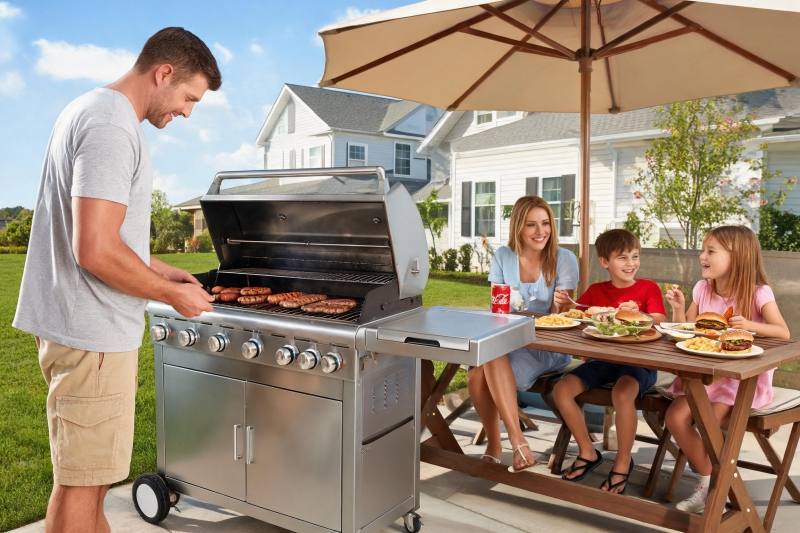
Search for a gas BBQ grill manufacturer and you will find hundreds of factories that look identical on a screen: the same stainless-steel photography, the same line about welcoming OEM orders, the same promise of competitive pricing. What actually separates a supplier that carries your brand for a decade from one that produces a recall is roughly a dozen things, and almost none of them appear on a website. This is the framework we hand to buyers before a first order, and it is the same framework we invite them to run on us.
Third-party research puts the global gas barbeque grill market at around US$4.6 billion in 2026, on a path to roughly US$7.6 billion by 2035, with gas holding the largest share of the wider barbeque category. Inside that growth the sourcing question has changed shape. Buyers are no longer deciding between gas and charcoal. They are deciding which factory can hold one specification stable across the second, third and tenth order.
1. What the phrase should actually mean
A gas BBQ grill manufacturer is not simply a company able to produce a grill. Four capabilities separate a genuine manufacturing partner from a supplier that resells other people's output.
- It controls the whole process. Stamping, bending, welding, surface treatment, burner assembly, ignition testing and packaging run under one quality system rather than across subcontractors.
- It engineers rather than copies. A factory that reads your drawing and questions one tolerance, before quoting, will usually save you more money than one that agrees with everything.
- It owns the compliance file. Gas certificates are issued per model and per production site. A manufacturer understands that your certificate must cover your model, your gas type and your market.
- It survives a repeat order. The same weld height, the same coating thickness, the same carton structure six months later. Repeat-batch consistency is the hardest capability to fake.
2. A 12-point vetting framework
Score every candidate on each line. Anything you cannot evidence is a zero rather than a "probably".
| Checkpoint | What to look for | Evidence to demand |
|---|---|---|
| 1. Manufacturing ownership | Who performs stamping, welding, coating, assembly | Live walkthrough of each workshop, with timestamps |
| 2. Engineering depth | In-house ID and MD engineers, drawing turnaround | Your spec redrawn in 3D; engineering headcount |
| 3. Material traceability | Steel grade and thickness by part: lid, body, burner, grate | Material certificates; thickness measured on your sample |
| 4. Burner and valve sourcing | Who makes the burner, valve, thermocouple, igniter | Component suppliers named; spare parts list |
| 5. Gas safety testing | Leak test, ignition, flame stability, low-flame stability | Written test protocol plus a live demonstration |
| 6. Coating durability | Pretreatment, powder thickness, salt-spray hours | Salt-spray report; adhesion test result |
| 7. Certification coverage | CE, ETL or CSA, AGA, GS, LFGB and FDA for food contact | Certificate number, issuing body, model list, expiry |
| 8. OEM and ODM depth | Logo, colour, carton, manual, structure change, new tooling | A written customisation matrix with MOQ per change |
| 9. Sampling protocol | Pre-production sample and a written approval gate | Sample lead time; who signs the approval |
| 10. MOQ and tooling | Minimum order per product and per change; mould ownership | Written terms and an explicit tooling ownership clause |
| 11. Packaging and loading | Carton, foam, pallet, container loading plan | Packaging specification and a loading photo record |
| 12. Communication | A named engineer or merchandiser; documented changes | A change-order process, not a chat thread |
3. Capability you can see, not just read
When buyers audit our plant in Foshan, the walkthrough deliberately skips the showroom. Three stations decide whether a factory can hold a gas grill program: the forming and welding line, the coating line, and the gas test bench. If you cannot visit, a live video tour with timestamps across those three stations is the minimum substitute.
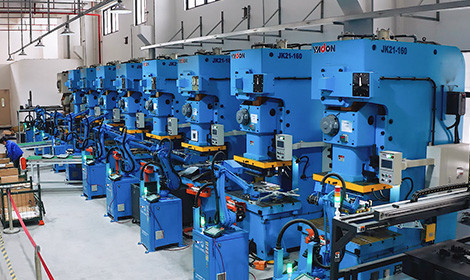
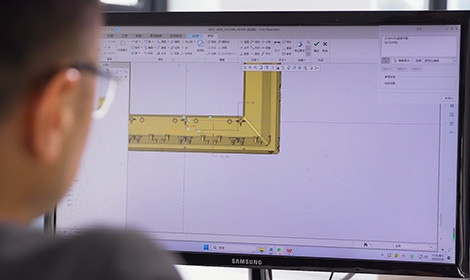

The output of that capability is easier to judge than the capability itself. A representative program looks like this:
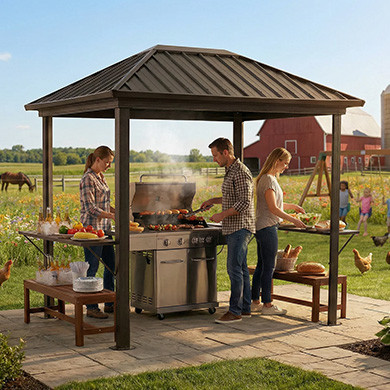
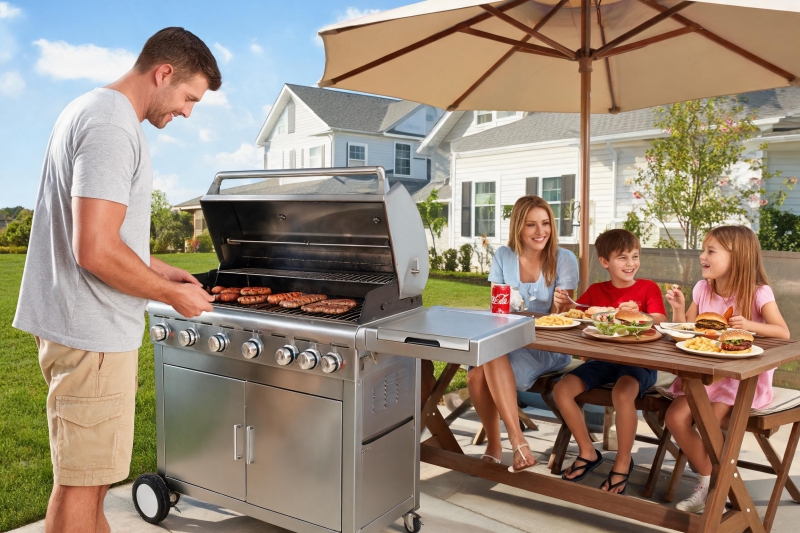
Freestanding 4-Burner Outdoor Kitchen Gas BBQ Grill
Model KYQ-HC104R-SB-XP is built for brand owners who need a specification they can repeat. Stainless steel burners and firebox, a full black trolley, stainless steel warming rack and flame tamer. Structure, colour, carton artwork and manual can all be configured to your market.
View the full specification4. OEM, ODM or trading company
Buyers often use these three words interchangeably. They describe three different commercial relationships, and the difference shows up in who owns the design, what the minimum order looks like and what happens when your best-selling model is copied.
| Model | Who designs | What you own | Best suited to |
|---|---|---|---|
| OEM | You, to your drawing | The design, the tooling, the brand | Established brands with a fixed specification and volume to protect |
| ODM | The factory, from its platform | The brand and the packaging, not the platform | New programmes testing a market before committing to tooling |
| Trading company | Whoever they buy from | Nothing you can enforce | Small mixed orders where category breadth matters more than control |
A trading company is not automatically the wrong answer. It is the wrong answer when you are told it is a factory. Ask one question and listen carefully: which workshop does the welding, and who runs the leak test? A manufacturer answers with a process. A trader answers with a promise.
5. Certification is the filter, not the marketing
The trap that catches experienced buyers. A certificate on file is not a certificate for your order. Gas grill certification is issued for a specific model, a specific gas type and a specific production site. A CE declaration that covers a three-burner model does not cover the four-burner version you are about to order, and changing the injector set for a different gas can invalidate the file. Ask for the certificate number, the issuing body, the covered model list and the expiry date, then check it.
What a legitimate manufacturer should be able to place in front of you, per market:
- Europe: CE marking under the Gas Appliances Regulation (EU) 2016/426, with GS voluntary for Germany and LFGB or FDA compliance for surfaces that touch food.
- North America: ETL or CSA certification to the applicable ANSI Z21 series for outdoor cooking gas appliances, plus labelling requirements such as California Proposition 65 for some retail channels.
- Australia and New Zealand: AGA certification for gas appliances.
- Anywhere: ISO 9001 as a management baseline, and a spare parts list that names the burner, valve and thermocouple.
6. Compare quotations, not prices
A 15 percent lower unit price almost always means a different product. Two quotes are only comparable when they describe the same thickness, the same burner material, the same grate, the same coating, the same carton and the same Incoterm. Before you compare numbers, make the offers identical on paper.
- Fix the specification first. Write down steel grade and thickness per part, burner and valve make, grate material, coating method and carton structure.
- Ask what the price excludes. Finished goods and a standard export carton are usually in. Crating, freight, customs and destination delivery usually are not.
- Separate tooling from unit cost. Ask who owns the mould, and whether the tooling charge is refunded against volume.
- Price the second order, not the first. Ask what the unit price will be at repeat volume, and how long the quote is firm given steel price movement.
- Add the cost of failure. Replacement parts, warranty handling and a recall are not on the quotation, and they are the line that decides your margin.
7. Six red flags
- Certificates that cannot be produced per model. "We can obtain CE later" is not acceptable for a gas appliance.
- Inconsistent company facts. Different founding years, floor areas or export figures across the website, the platform profile and the quotation.
- No test bench. A gas grill factory without in-house leak and ignition testing is not a gas grill factory.
- No video tour. Legitimate plants show production lines as a matter of routine.
- Specification drift in the sample. A sample that is better than the agreed specification is as serious a warning as one that is worse.
- No named contact. If nobody is accountable for technical questions before the order, nobody will be accountable after it.
8. Questions buyers ask most
How do I verify a gas BBQ grill manufacturer without travelling to China?
Use three checks together. Verify certificate numbers and model coverage with the issuing body. Request a live video tour with timestamps covering the welding line, the coating line and the gas test bench. Ask for two customer references you are permitted to contact. Third-party inspection before shipment adds a further layer.
What is a realistic MOQ for an OEM gas grill programme?
Container-based programmes for a standard model commonly start in the low hundreds of units. A change to structure, dimensions or tooling raises the minimum order, because the factory has to amortise development work. Ask for the MOQ separately for a standard product, for a logo and packaging change, and for a structural change, then decide which of the three you actually need.
How long does an OEM grill order take?
Plan in three stages rather than one number: sample development and approval, mass production after approval, and sea freight to your market. Custom tooling adds its own period, and so does retesting a modified gas appliance. Ask for the lead time measured from sample approval, not from the order date.
Should I buy from one factory or several?
One factory per product family usually wins on consistency, price and technical communication. Several factories make sense when your categories are genuinely unrelated, or when a single supplier creates a supply risk your business cannot absorb. What you should not do is split one programme across two factories, because neither will own the result.
9. How to use this framework
Run the twelve points against at least three candidates before you shortlist, and treat the exercise as evidence collection rather than a conversation. The factory that answers your technical questions precisely, shows you the three stations, and can name its certificate numbers is the one worth a first order. The factory that agrees with everything quickly is the one to be careful with.
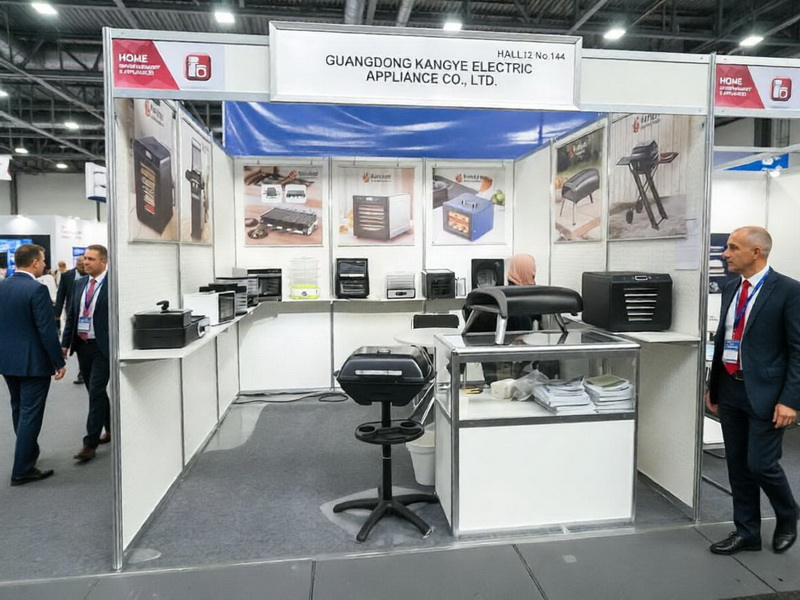
Kangye Electric has manufactured gas grills and outdoor cooking appliances since 1989 as an OEM and ODM partner for brands in more than 80 countries. We publish this framework because it is the one we are audited against: ask our export team for certificate copies, a live factory video tour, an export record or our IFA exhibitor profile, and compare the answers with anyone else on your list.
Sources and limits: market figures are third-party estimates cited for context, from MarkWide Research (gas barbeque grill market, 2026 to 2035) and Expert Market Research (barbeque grill market by product type). Regulatory references are to Regulation (EU) 2016/426 and Regulation (EC) 1935/2004, and to the ANSI Z21 series for North American outdoor cooking gas appliances. Requirements change and differ by model and gas type; confirm current obligations with a compliance advisor before shipping. Company figures for Kangye Electric are self-reported and can be verified on site or through certificate numbers.