Electrical Safety in Kitchen Appliances: Grounding, Insulation and Standards
- Share
- publisher
- Kangye
- Issue Time
- Sep 10,2026
Summary
Electrical safety in kitchen appliances rests on grounding, insulation and standards. This guide explains protection classes (Class I and Class II), earthing requirements, basic vs reinforced insulation, leakage-current and dielectric test limits, and how IEC 60335-1, UL 60335-1 and EN 60335-2-9 govern compliance, plus the GFCI/AFCI and RCD installation protections and the checks importers should run before ordering.
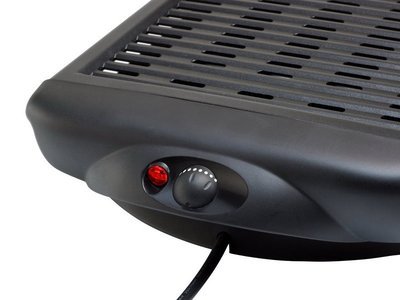
Electrical Safety in Kitchen Appliances: Grounding, Insulation and Standards
Kitchen appliance electrical safety is the one specification that never appears in a hero image, yet it can end a product line overnight. A grill, air fryer, dehydrator or steamer that looks flawless on a shelf can still be refused at the border, pulled from retail by a safety notice, or — far worse — put a household at risk of shock or fire if its grounding, insulation and compliance documentation do not hold together as a system. This guide explains how an appliance becomes electrically dangerous, what the protection classes and insulation grades mean in practice, which standards govern kitchen appliance electrical safety (IEC 60335-1, UL 60335-1, EN 60335-2-9 and their national adoptions), and which tests and certificates a buyer should demand before placing an order.
Key takeaway: Electrical safety in a kitchen appliance rests on three pillars that must all be present. Insulation keeps current away from users (basic, supplementary, double or reinforced). Grounding gives fault current a low-resistance path to earth so a protective device trips before a person becomes the path (Class I appliances). Standards and testing — IEC 60335-1 and its Part 2 family, adopted as UL 60335-1 in North America and EN 60335-2-9 in the EU — define the limits, and third-party test reports prove them. A certificate alone is not enough: it must match your exact model, voltage and configuration, and it must come from a recognised laboratory.
Why Kitchen Appliance Electrical Safety Decides Whether a Product Ever Reaches the Shelf
Electrical hazards are a leading contributor to home fires and shock injuries, and the kitchen is where they concentrate. According to NFPA research, cooking is the leading cause of reported home fires and home fire injuries in the United States, with roughly 49% of home fires starting in the kitchen and ranges or cooktops involved in most cooking-fire incidents. Electrical distribution and lighting equipment is a smaller but disproportionately deadly category — about 10% of reported home fires but 18% of home fire deaths, because faults often begin hidden inside walls, cords and connections. On the consumer side, the Electrical Safety Foundation International (ESFI) notes that ground-fault circuit interrupters have helped cut home electrocutions roughly in half since the 1970s — evidence that the right protective engineering genuinely saves lives.
Those statistics are not just a consumer story; they are a commercial one. In July 2026, Panasonic recalled approximately 11,480 electric toaster ovens in the United States and 2,184 in Canada (models NB-G200, NB-G205S and NB-G200SVA) because a protective fibreglass sleeve did not fully cover the power-cord insulation — a potential shock and fire hazard. The CPSC had received four reports of the units tripping breakers or outlets, though no injuries were reported. The defect was not a thermostat or a heating element; it was insulation, the most basic pillar of electrical safety. For importers the lesson is blunt: electrical safety failures are usually mundane, cheap to prevent at the design stage, and extremely expensive to fix after shipment. Our overview of the 2026–2027 US kitchen appliance market shows how crowded and price-sensitive the category has become.
How a Kitchen Appliance Becomes Dangerous: The Three Failure Paths
Almost every electric shock or electrical fire traces back to one of three mechanisms, and understanding them makes the rest of the standards far easier to read.
- Insulation failure. A live conductor touches accessible metal because insulation has thinned, cracked, been pinched during assembly, or been defeated by heat and moisture. Once that happens, the metal surface the user touches is live. This is the mechanism behind the Panasonic toaster-oven recall and behind most "the appliance gave me a shock" incidents.
- Loss of the grounding path. Fault current needs somewhere safe to go. If the protective-earth connection is missing, corroded, loose, or bypassed (a cut-off third prong, a two-prong adapter, an ungrounded extension cord), a fault on a Class I appliance leaves the housing energised until someone touches it and completes the circuit. Kansas State University's electrical-safety guidance is unambiguous: all electrical equipment must be grounded, and frayed or deteriorated cords must be replaced — never repaired or ignored.
- Overheating and arcing. Undersized conductors, poor contact, overloaded circuits and damaged cords generate heat before anything looks wrong. Cord damage is a recurring culprit: analysis of electrical-fire causes attributes roughly 20% of small-appliance fires to cord damage, and faulty wiring is implicated in about half of electrical structure fires. This is why cord construction, cross-section and strain relief are written into the standards rather than left to the factory.
An appliance can be perfectly safe and still cause a fire if misused — left unattended under a cabinet, used on a wet countertop, or run through a daisy-chained extension lead. Electrical safety is therefore a shared responsibility between the manufacturer's design and the user's installation; our guide to electrical ratings, voltage and frequency covers the specification side.
Protection Classes: Class 0, Class I, Class II and Class III Explained
Before insulation and grounding can be discussed, a product must be assigned a protection class, because almost every other requirement — from leakage-current limits to whether an earth wire is required at all — follows from it.
| Class | Protection Method | Earth Wire | Typical Kitchen Appliances | Notes |
|---|---|---|---|---|
| Class 0 | Basic insulation only; no protective earth | None | Legacy small appliances | Largely obsolete — not accepted for many modern markets |
| Class I | Basic insulation plus protective earthing of accessible metal | Required | Metal-bodied grills, ovens, microwave ovens, steamers | Depends on a reliable earth path; the single most common class for heating appliances |
| Class II | Double or reinforced insulation; no earth connection permitted | No | Plastic-bodied air fryers, blenders, toasters | Safer against loss of earth, but the insulation must be robust and verified |
| Class III | Safety Extra-Low Voltage (SELV) supply | No | Low-voltage accessories, some USB-powered devices | Voltage limited (about 30 V AC peak / 42.4 V DC); uncommon for high-power cooking |
Class I is the workhorse of kitchen cooking appliances because heating elements and metal cook surfaces are hard to isolate, so the design instead guarantees that any exposed metal is bonded to earth. Class II is elegant where a product can be fully enclosed in insulating material, because it removes the dependence on the installation's earthing — but it also removes the earth as a safety net, which is why double-insulated products face stricter dielectric and leakage limits, not looser ones. A common sourcing error is to assume an appliance can be "upgraded" from Class I to Class II simply by adding a plastic housing; that requires a genuine redesign of creepage paths, insulation barriers and thermal behaviour.
Grounding (Earthing): The Fault-Current Path That Saves Lives
Protective earthing is not there to carry current in normal operation — it is a dormant path that only matters in a fault. When insulation fails and a live conductor contacts metal, the earth connection provides a low-resistance route back to the supply, drawing enough fault current to trip the breaker or fuse almost instantly. Without it, the metal simply waits for a person to become the path.
The standards translate this into measurable requirements:
- Earth continuity resistance. IEC 60335-1 requires the resistance between the earthing terminal and any accessible earthed metal to be no more than 0.1 Ω, measured with a test current of about 25 A (some national deviations permit up to 0.2 Ω). Anything higher suggests a weak bond — a painted contact surface, a loose screw, or an undersized conductor.
- Conductor specification. The protective conductor must be at least the cross-section of the live conductor (and no smaller than 1.5 mm² copper for typical mains cords) and must be identifiable — green/yellow in most markets.
- Structural integrity. The earth connection must survive assembly torque, vibration and, crucially, heat; thermoplastic parts must not soften enough to let the bond loosen. Good designs use toothed washers on conductive surfaces stripped of coating, and never rely on a screw through paint.
There is a genuine limitation worth stating plainly: earthing is only as good as the building's wiring. A Class I appliance connected to a socket with a broken earth — common in older housing stock — provides no protection at all, which is why GFCI/RCD devices exist as a second line of defence. A supplier who says "the earth wire makes it safe, full stop" is oversimplifying. Our article on electric grill heating elements shows how element construction and earthing work together in a real cooking appliance.
Insulation: Basic, Supplementary, Double and Reinforced
Insulation is the primary barrier between the user and live parts, and the standards define several grades that must be proven by distance and by test voltage. Functional insulation is the minimum needed for the circuit to work and is not a user-protection layer on its own; basic insulation protects against shock in normal condition; supplementary insulation is an independent second layer added on top of it; double insulation combines basic and supplementary; and reinforced insulation is a single system providing protection equivalent to double insulation.
Two physical parameters turn these words into engineering. The first is clearance and creepage distance: the shortest air gap and the shortest path over a surface between live and accessible parts. Under IEC 60664-1 with the pollution degree typical of kitchen environments (degree 2), a 220–240 V working voltage commonly requires roughly 2.5 mm creepage for basic insulation, about 5.0 mm for supplementary insulation and around 8.0 mm for reinforced insulation. These are not aesthetic details — a cheap PCB layout can violate them, and no amount of marketing can compensate. The second is dielectric strength, verified by a hi-pot (high-potential) test.
| Insulation Type | Test Voltage (rated ≤ 150 V) | Test Voltage (rated 150–250 V) | Duration |
|---|---|---|---|
| Functional insulation | 500 V | 500 V | 1 minute |
| Basic insulation | 1,000 V | 1,250 V | 1 minute |
| Supplementary insulation | 1,750 V | 1,750 V | 1 minute |
| Double / reinforced insulation | 3,000 V | 3,000 V | 1 minute |
These are type-test values from the IEC 60335-1 dielectric-withstand tables (as adopted in CAN/CSA C22.2 No. 60335-1). On a production line, manufacturers typically apply a higher voltage for a few seconds rather than a full minute — a trade-off that should be documented in the quality plan. One hidden risk worth knowing: interference-suppression Y-capacitors legitimately add small leakage current, which is why the standard allows the capacitor to be disconnected during the leakage test, and why its type and certification matter more than its price.
The Standard Family: IEC 60335, UL 60335 and National Adoptions
Kitchen appliance electrical safety is governed by an international standard family rather than a single document. IEC 60335-1 is the general requirement for household and similar electrical appliances, rated up to 250 V single-phase (and higher for other appliances). Part 2 standards add the particular requirements for each product type, and Part 1 must always be applied together with the relevant Part 2.
| Standard | Covers | Market / Notes |
|---|---|---|
| IEC 60335-1 | General safety for household appliances — insulation, grounding, leakage, temperature, mechanical strength, abnormal operation | International base standard; 6th edition (2020) with amendments, widely adopted |
| IEC/EN 60335-2-9 | Grills, toasters and similar portable cooking appliances | Applies to electric grills, sandwich makers, waffle irons, portable ovens |
| IEC 60335-2-13 | Deep-fat fryers, frying pans and similar | Air fryers and fryers |
| IEC 60335-2-25 | Microwave ovens, including combination types | Kitchen heating appliances |
| UL 60335-1 | US adoption of IEC 60335-1 | 7th edition published 11 December 2025 (ANSI-approved the same day); progressively replaces legacy UL 1026 / 1082 standards |
| CAN/CSA C22.2 No. 60335-1 | Canadian adoption with national deviations | Aligned to 120/240 V split-phase practice |
The European pathway layers legal duties on top of the standards. A small kitchen heating appliance within the scope of the Low Voltage Directive (2014/35/EU) must satisfy the applicable EN 60335 parts, carry the CE marking (at least 5 mm high and legible), be backed by a Declaration of Conformity, and be supported by technical documentation retained for around ten years. EMC (2014/30/EU) and, for smart models, the Radio Equipment Directive (2014/53/EU) also apply, alongside RoHS, REACH and WEEE. Our export compliance guide for kitchen appliances maps these obligations country by country.
A candid caveat about certificates: "CE marked" is a self-declaration, not a third-party licence. It can be legitimate for a well-documented product — but the paperwork is only as trustworthy as the factory behind it. For North America, the equivalent credential is a listing or recognition from a recognised National Recognised Testing Laboratory (NRTL) such as UL, ETL/Intertek or CSA, and buyers should verify the certificate number directly with the issuing body rather than accept a scan.
The Tests That Prove a Kitchen Appliance Is Safe
Standards only matter if they are tested, and a competent safety report will show results for a recognisable battery of checks. The most important are these:
| Test | What It Proves | Typical Requirement |
|---|---|---|
| Leakage current | Current escaping to accessible parts stays harmless | Class II ≤ 0.25 mA; Class 0/0I/III ≤ 0.5 mA; portable Class I ≤ 0.75 mA; stationary Class I motor-operated ≤ 3.5 mA; stationary Class I heating ≤ 0.75 mA or 0.75 mA/kW (max 5 mA); tested at 1.06 × rated voltage |
| Dielectric strength (hi-pot) | Insulation withstands over-voltage without breakdown | Basic 1,000–1,250 V; supplementary 1,750 V; reinforced 3,000 V; 1 minute |
| Earth continuity | The protective path can carry fault current | ≤ 0.1 Ω at about 25 A (deviations to 0.2 Ω) |
| Insulation resistance | Insulation is intact before and after moisture/heat | Measured at a defined DC voltage; a high value (often hundreds of MΩ) confirms integrity |
| Temperature rise | Surfaces, windings and cords stay within safe limits | Accessible metal handles/knobs limited to about 30 K, plastic to about 40 K; heating tests at up to 1.15 × rated input |
| Abnormal operation | Faults do not cause fire or shock | Stalled motor, blocked airflow, shorted components — thermal cut-outs must respond |
| Mechanical & material tests | Housing resists impact and heat | 0.5 J spring-hammer impact; ball-pressure at 75/125 °C; glow-wire at 550/750/850 °C; stability on a 10° tilt |
One detail separates a rigorous factory from a fast one: testing 100% of production units for leakage and hi-pot, with results retained per batch, rather than checking only the first article. Our guide to how to audit an appliance factory lists the electrical test records to request on a site visit, and our explainer on the OEM appliance manufacturing process shows where these checks sit on the line.
Where Standards Meet Reality: Recalls, Cords and Substitutions
Standards exist to prevent the failures that actually reach consumers. Cord problems dominate recalls — insulation that does not fully cover the wiring, cords pinched during assembly, or protective sleeves omitted in a cost-reduction revision. When an approved design changes (a different cord set, a new thermostat supplier, a thinner housing wall), the safety file can quietly become invalid, which is why change control matters as much as the original certificate.
The Installation Side: GFCI, AFCI and RCD Protection
Even a correctly built Class I appliance relies on the installation for its final layer of protection. In North America, the National Electrical Code requires ground-fault circuit-interrupter (GFCI) protection for receptacles in kitchens, bathrooms, basements, garages and outdoors, and the requirement has expanded to cover dedicated circuits feeding appliances such as dishwashers, ranges, wall ovens and microwaves. A GFCI monitors the difference between live and neutral current; when a small imbalance appears — current leaking to earth, often through water or a person — it disconnects the circuit in a fraction of a second. In the EU and many other markets, the equivalent device is the residual-current device (RCD), typically rated at 30 mA for personnel protection.
Arc-fault circuit interrupters (AFCI) address a different hazard — dangerous arcing from damaged or loose wiring — and are now required for many 120 V branch circuits, including kitchen circuits, under the NEC. One honest caution: GFCI and AFCI devices can nuisance-trip with appliances that have higher leakage, which is why some manufacturers publish compatibility guidance. Grounding, insulation and protective devices are a system; the standards treat them as such, and so should a sourcing decision.
What Buyers and Importers Should Verify Before They Order
Electrical safety is where a sourcing short-cut becomes a liability, so the verification checklist should be explicit and documented. At minimum, confirm the following for your exact model, voltage and configuration.
- The protection class and its implication. Class I means an earth wire and a compliant earthing system; Class II means no earth and verified double/reinforced insulation. The certificate must state the class, and the physical product must match it.
- Voltage and plug family. 120 V/60 Hz for North America, 220–240 V/50 Hz for the EU and most of Asia — the same product name can hide different internal builds, so the test report must match the version you will actually import.
- Certificate authenticity and scope. Verify the NRTL listing (UL/ETL/CSA) or the EU test report with the issuing laboratory, and check that it is not expired or limited to a sample that differs from your order.
- Component traceability. Cords, plugs, thermostats, thermal cut-outs and Y-capacitors should be from named, certified suppliers — with the requirement that substitutions need prior written approval.
- Marking and documentation. Rating label with voltage, power and class; the correct market marks; instructions in the required languages; and, for the EU, a Declaration of Conformity plus retained technical file.
- Production test evidence. 100% leakage and hi-pot testing, with earth-continuity testing for Class I units, and batch records available on request.
For brands building a private-label line, the same logic extends into customisation: a new logo or packaging is low-risk, but a new cord colour, a changed housing material or a shift to a lower-cost thermostat can invalidate the safety file. Our guide to private-label kitchen appliances and the deeper look at stainless steel grades show how material decisions feed directly into both safety and durability.

Featured Product: Kangye KYS-868 Indoor Electric BBQ Grill
Featured Product: KYS-868 1350W Indoor Electric BBQ Grill
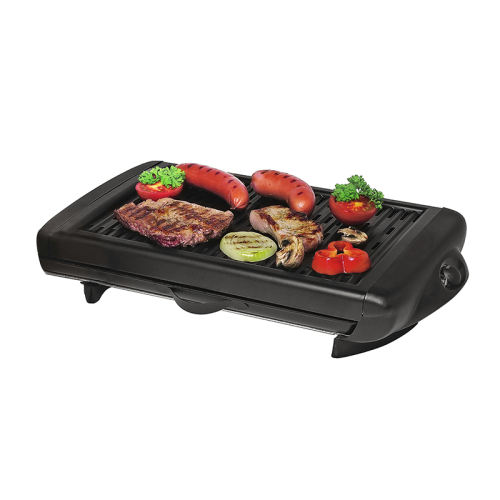
The KYS-868 is a 1350 W smokeless indoor electric BBQ grill built for the kind of appliance where insulation, earthing and thermal control all matter at once: a metal-bodied, high-wattage heating product used on countertops near people. It pairs a removable die-cast aluminium non-stick grill plate and a detachable drip tray with 5-level mechanical temperature control and fast 3-minute preheating, and it is engineered as a dual-voltage platform so one design can be certified and shipped to more than one market.
- 1200–1400 W (220–240 V, 50/60 Hz) / 1120 W (120 V, 60 Hz) dual-voltage design
- 5-level mechanical thermostat with over-temperature protection
- Removable non-stick plate + detachable drip tray for healthier cooking and easy cleaning
- 510 × 260 × 90 mm; 20GP 1,534 pcs / 40GP 2,920 pcs; MOQ 1,534 pcs (20GP)
- OEM/ODM: private label, custom packaging, and market-specific certification packages
For a broader comparison of electric cooking products from a sourcing angle, see our indoor electric grill buying guide and our analysis of gas grill burner design for the fuel-based alternative.
FAQ: Electrical Safety in Kitchen Appliances
What is the difference between grounding and insulation?
Insulation keeps current away from the user by separating live parts from reachable surfaces (basic, supplementary, double or reinforced). Grounding is a separate, normally dormant path that carries fault current safely to earth so a breaker trips if insulation fails. Class I appliances use both; Class II appliances rely on insulation alone, which is why their insulation must meet stricter limits.
Which standards apply to a kitchen appliance like an electric grill?
The general standard is IEC 60335-1 (adopted as UL 60335-1 in North America and CAN/CSA C22.2 No. 60335-1 in Canada), combined with the relevant Part 2 — for example IEC/EN 60335-2-9 for grills and portable cooking appliances. In the EU these support the Low Voltage Directive 2014/35/EU and CE marking; in the US they support an NRTL listing such as UL or ETL.
What leakage-current limit should a kitchen appliance meet?
Under IEC 60335-1, Class II appliances are limited to 0.25 mA, while portable Class I appliances are allowed up to 0.75 mA (stationary Class I motor-operated appliances up to 3.5 mA, and stationary Class I heating appliances 0.75 mA or 0.75 mA/kW up to 5 mA). The measurement is taken at 1.06 times rated voltage, and it must cover normal and single-fault conditions.
Why do I need a GFCI if my appliance is already grounded?
Grounding only works if the building's earth path is intact. In older homes a socket can have a broken or missing earth, leaving a Class I appliance unprotected. A GFCI or RCD detects the small current imbalance caused by a ground fault and disconnects the circuit in a fraction of a second, adding protection that grounding alone cannot guarantee.
Does a CE mark guarantee an appliance is safe?
No. CE marking is a manufacturer's self-declaration of conformity, backed by a technical file and a Declaration of Conformity. It indicates the product is claimed to meet the requirements — not a third-party guarantee. Buyers should verify the supporting test reports and, for North America, confirm the NRTL certificate with the issuing laboratory.
Can I sell a Class I appliance as Class II by changing the housing?
No. Changing protection class is a redesign, not a cosmetic change. Moving to Class II removes the earth connection and therefore requires genuine double or reinforced insulation, compliant creepage and clearance distances, and a new dielectric and leakage test record. Substituting a plastic housing while keeping a Class I internal layout leaves the product non-compliant and potentially dangerous.
Summary: An Electrical Safety Checklist for Every Appliance Order
Summary: Kitchen appliance electrical safety is a system of insulation, grounding and standards — not a single certificate. Insulation stops current reaching the user; grounding carries fault current safely to earth for Class I products; and the IEC 60335 family (adopted as UL 60335-1 and EN 60335-2-9) defines the leakage, dielectric, earth-continuity and temperature limits that prove both. In practice, most failures trace back to mundane causes — a damaged cord, a weak earth bond, an unapproved component substitution — which is why verification and change control matter as much as the original design.
- Confirm the protection class (Class I with earth, or Class II with double/reinforced insulation) and make sure the physical product matches the certificate.
- Demand test evidence for leakage current, dielectric strength, earth continuity (≤ 0.1 Ω for Class I), insulation resistance, temperature rise and abnormal operation — on 100% of production, not just first articles.
- Verify voltage/plug family, certificates and component suppliers for the exact version you will import, and require written approval before any critical substitution.
- Plan for the installation: GFCI/AFCI in North America and RCD (30 mA) in the EU are the final layer of protection that grounding and insulation assume.
- Remember that CE is self-declaration; for North America, validate the NRTL listing directly with the issuing laboratory.
Sourcing kitchen appliances with credible electrical safety documentation? Kangye is an OEM/ODM manufacturer in Guangdong, China, with 35+ years of manufacturing experience and exports to 100+ countries, producing food dehydrators, grills, pizza ovens, air fryers, steam cookers, vacuum sealers and pet feeders and fountains. We build dual-voltage platforms, run leakage, hi-pot and earth-continuity testing in production, and support market-specific certification packages (CE, GS, ETL, CB, RoHS, REACH, LFGB, FDA) with full OEM/ODM customisation. Contact our team to discuss your target markets and volumes, or browse the full product range .